

Are you struggling to get accurate measurements with a Vernier caliper? You’re not alone.
Many people find it tricky to read the tiny scales and numbers correctly. But once you learn the simple steps, you’ll be able to measure like a pro every time. This guide will break down the process into easy, clear parts so you can boost your confidence and precision instantly.
Keep reading, and you’ll discover how to unlock the full potential of your Vernier caliper without any confusion.
Credit: aci24.com
Vernier Caliper Basics
A vernier caliper is a tool used to measure length, diameter, or depth. It gives more precise readings than a ruler.
It has two scales that work together to show exact measurements. Learning how to read it helps in many tasks.
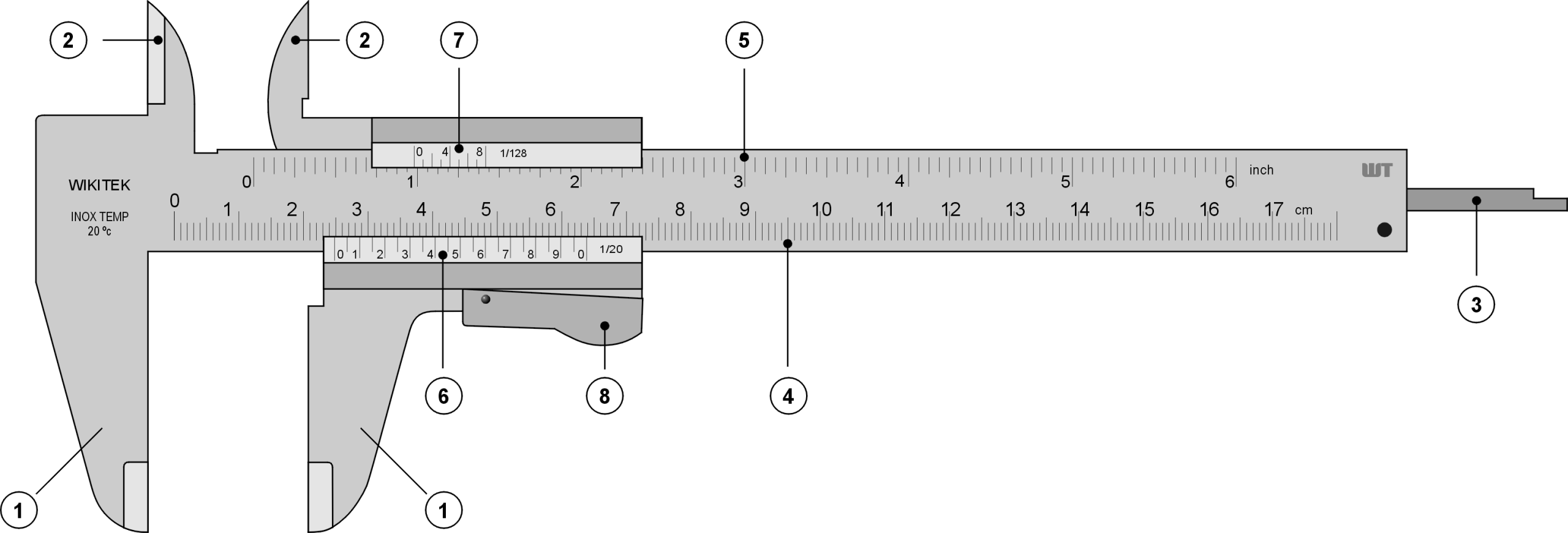
Parts Of A Vernier Caliper
A vernier caliper has several parts. Each part helps in measuring objects accurately.
- Main scale:The fixed scale marked in millimeters or inches.
- Vernier scale:The sliding scale that gives precise readings.
- Fixed jaw:The part attached to the main scale, holds one side of the object.
- Sliding jaw:Moves along the main scale to hold the other side of the object.
- Depth rod:A thin rod that measures depth or holes.
- Lock screw:Locks the sliding jaw in place for stable readings.
Types Of Vernier Calipers
There are different types of vernier calipers. Each type is used for specific measuring needs.
- Inside Vernier Caliper:Measures internal dimensions like the inside of a pipe.
- Outside Vernier Caliper:Measures external dimensions like the width of an object.
- Depth Vernier Caliper:Measures depth of holes or slots.
- Digital Vernier Caliper:Shows readings on a digital screen for easy reading.
Reading The Main Scale
The main scale on a vernier caliper shows the measurement in millimeters or inches. It is the fixed part of the caliper and is easy to read.
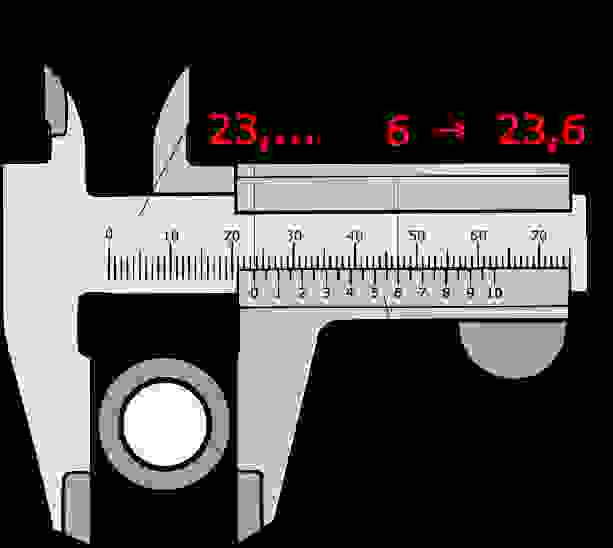
To get the correct reading, you first look at the main scale before checking the vernier scale. This helps find the whole number part of the measurement.
Identifying The Main Scale Units
The main scale has marks that show units of length. These units can be millimeters or inches depending on the caliper type.
Each small mark on the main scale usually stands for 1 millimeter or 0.1 inch. Larger marks show full units like 1, 2, or 3 millimeters.
- Millimeter scale: Small marks = 1 mm each
- Inch scale: Small marks = 0.1 inch each
- Read the number before the zero on the sliding jaw
Locating The Zero Mark
The zero mark is the point where the sliding jaw meets the main scale. It shows where you start reading the measurement.
Look closely at the zero mark position on the main scale. The number just before this zero is the main scale reading.
- If zero is between 10 and 11, read 10 as the main scale value
- Do not include the zero mark itself
- Combine this with the vernier scale for the full measurement
Using The Vernier Scale
The Vernier scale helps measure small lengths accurately. It works with the main scale to give precise readings.
Learning to read the Vernier scale lets you measure things correctly. Focus on how the scales align and how to calculate the reading.
Finding The Vernier Scale Alignment
Look at the main scale first. Find the zero mark on the Vernier scale and see where it fits on the main scale.
Next, check which line on the Vernier scale matches exactly with a line on the main scale. This is the alignment line.
- Find zero on Vernier scale
- Note main scale mark just before zero
- Look for Vernier line matching main scale line
- That matching line shows the precise measurement
Calculating Vernier Scale Readings
Start with the main scale reading before the zero on the Vernier scale. This is the main value.
Then, multiply the aligned Vernier line number by the least count to get the extra value.
| Term | Description | Example |
|---|---|---|
| Main Scale Reading | Value just before Vernier zero | 12 mm |
| Vernier Scale Division | Aligned line number | 4 |
| Least Count | Smallest measurement unit | 0.02 mm |
| Total Reading | Main reading + (Vernier division × least count) | 12 + (4 × 0.02) = 12.08 mm |
Step-by-step Measurement Process
Learning to read a Vernier Caliper is a useful skill. It helps you measure objects accurately. Follow these steps to get precise measurements.
With practice, you can easily measure length, diameter, and depth. Let's explore the process of using a Vernier Caliper.
Preparing The Caliper
Before you begin, ensure the caliper is clean. This prevents errors in measurements. Check that the jaws slide smoothly along the scale.
- Wipe the caliper with a clean cloth.
- Ensure the zero setting is accurate.
- Adjust the locking screw for a smooth slide.
Measuring External Dimensions
To measure the external dimensions of an object, use the large jaws. Align the object between the jaws and read the scale accurately.
The formula for reading is:
Total Reading = Main Scale Reading + Vernier Scale Reading
Measuring Internal Dimensions
Use the small jaws to measure internal dimensions. Insert them into the object's opening. Gently open the jaws to fit the inside edges.
| Measurement Type | Tool Used |
| External | Large Jaws |
| Internal | Small Jaws |
| Depth | Depth Rod |
Measuring Depth
The depth rod is used for measuring depth. Extend it by sliding the caliper. Place the rod at the object's bottom and read the scale.
- Ensure the object is stable.
- Extend the depth rod fully.
- Read both the main and Vernier scales.
Common Errors And Tips
Reading a vernier caliper correctly is important for accurate measurements. Small mistakes can cause wrong results.
This guide covers common errors and useful tips to help you avoid mistakes and get the best reading.
Avoiding Parallax Error
Parallax error happens when you do not look straight at the scale. This causes wrong readings.
- Always position your eyes directly above the scale markings.
- Do not read the scale from an angle.
- Use good lighting to see the scale clearly.
- Keep the caliper steady while reading.
Ensuring Proper Calibration
Calibration makes sure your vernier caliper shows correct values. Without it, measurements can be off.
| Calibration Check | What to Do | Why It Matters |
| Zero Check | Close jaws and check if scale shows zero | Ensures no gap or error at start |
| Clean Surfaces | Remove dirt and dust from jaws | Prevents false readings from debris |
| Regular Testing | Compare with standard gauge blocks | Confirms accuracy over time |
Applications Of Vernier Caliper
The Vernier caliper is a tool used to measure length, depth, and diameter. It gives very accurate readings. Many fields use this tool to check small measurements.
This tool helps people measure parts and objects with precision. It is easy to read and works for many tasks in science and industry.
Use In Engineering
Engineers use Vernier calipers to measure parts during design and testing. It helps check if parts fit well together. This tool is important in building machines and structures.
It measures inside and outside dimensions and depths. Engineers can find small differences in sizes that affect machine work.
- Measure shaft diameters
- Check hole sizes
- Verify part thickness
- Test material depths
Use In Manufacturing
Manufacturers use Vernier calipers to ensure parts meet quality standards. They measure products during and after production. This prevents errors and saves money.
The tool helps workers keep measurements consistent. It is useful for small parts that machines produce. Accurate measuring improves product reliability.
- Check part sizes on assembly lines
- Measure thickness of materials
- Ensure uniformity in products
- Inspect finished goods for defects
Digital Vs Manual Vernier Caliper
Vernier calipers are essential tools for precise measurements. They come in two main types: digital and manual. Both have unique features and benefits.
Understanding the differences helps you choose the right one for your needs. Explore the pros and cons of each type below.
Pros Of Digital Vernier Caliper
Digital vernier calipers offer clear and easy-to-read measurements. They are ideal for quick readings.
- Large digital display for easy reading
- Quick conversion between units
- Higher accuracy with less human error
- Data can be easily recorded or transferred
Cons Of Digital Vernier Caliper
Despite their benefits, digital calipers have some drawbacks. Consider these points before purchasing.
| Disadvantage | Explanation |
| Battery-dependent | Requires regular battery changes |
| Sensitivity to moisture | Not suitable for wet environments |
| Higher cost | More expensive than manual types |
Pros Of Manual Vernier Caliper
Manual calipers are traditional and reliable. They provide consistent results in various conditions.
- Battery-free operation
- Durable and long-lasting
- Cost-effective
- Works in all environments
Cons Of Manual Vernier Caliper
Manual calipers have limitations. They require practice and skill for accurate readings.
Choosing The Right Tool
Decide based on your needs and environment. If precision and ease are priorities, consider digital. For durability and cost, manual might be best.

Credit: www.threads.com

Credit: www.youtube.com
Frequently Asked Questions
What Is A Vernier Caliper Used For?
A Vernier Caliper measures internal, external dimensions, and depths with high accuracy. It’s commonly used in engineering and manufacturing.
How Do I Read The Main Scale On A Vernier Caliper?
The main scale shows measurements in millimeters or inches. Read the value just before the zero of the Vernier scale.
How To Read The Vernier Scale Accurately?
Find the Vernier scale line that perfectly aligns with any main scale line. That line’s value is the Vernier reading.
What Is The Formula To Calculate Vernier Caliper Reading?
Total reading = Main scale reading + Vernier scale reading × Least count. This gives precise measurement.
Conclusion
Reading a Vernier caliper is simpler than it seems. Focus on the main scale first. Then, check where the Vernier scale lines match. This method gives you a precise measurement every time. Practice regularly to build your confidence and speed.
Soon, measuring with a Vernier caliper will feel natural and easy. Keep your caliper clean and handle it carefully. Accurate readings help in many tasks, from school projects to work. Take your time and stay patient. Precision is key, and now you know how to achieve it.

