

Are you struggling to find the right nut and bolt sizes for your project? Choosing the correct size can save you time, money, and frustration.
Whether you're fixing something at home or working on a big construction job, knowing how to read a nut and bolt sizes chart is essential. This guide will make it simple for you to understand the different sizes and types, so you can make confident decisions every time.
Keep reading, and you’ll never have to guess which nut or bolt fits again!
Common Nut And Bolt Sizes
Understanding nut and bolt sizes helps in choosing the right fasteners. Sizes vary by diameter, length, and thread pitch.
This guide covers the common standards used for nuts and bolts in many projects.
Standard Diameter Measurements
Diameter is the width of the bolt or nut across its threads. It is usually measured in millimeters or inches.
- Common metric diameters: 6mm, 8mm, 10mm, 12mm, 16mm
- Common imperial diameters: 1/4", 3/8", 1/2", 5/8", 3/4"
- Diameter size affects strength and fit
- Always match nut diameter with bolt diameter
Length Variations
Bolt length is measured from the bottom of the head to the end of the bolt. Nuts do not have length but thickness instead.
| Bolt Length (mm) | Common Uses |
|---|---|
| 20 mm | Light assemblies and small parts |
| 50 mm | Medium-sized joints |
| 100 mm | Heavy machinery and construction |
| 150 mm+ | Special applications requiring deep fastening |
Thread Pitch Types
Thread pitch is the distance between threads. It determines how tight or loose the bolt fits.
- Coarse thread: Larger pitch, easier to install
- Fine thread: Smaller pitch, better for precision
- Extra fine thread: Used in specialized applications
- Match nut and bolt thread pitch for proper fit
Metric Vs Imperial Sizes
Understanding nut and bolt sizes is essential in construction and DIY projects. Two main systems are used: metric and imperial. Each has unique characteristics and applications.
The metric system uses millimeters, while the imperial system uses inches. Knowing the differences can help you choose the right tools and parts.
Key Differences
The metric system is based on units of ten, making it easier for calculations. It is widely used globally, especially in automotive and engineering industries.
| System | Unit | Common Use |
| Metric | Millimeters (mm) | Automotive |
| Imperial | Inches | Construction |
When To Use Each System
Choosing between metric and imperial depends on the project and location. Some countries prefer one system over the other.
- Use metric for precision and ease in scientific applications.
- Choose imperial for traditional construction in the United States.
- Check the project's specifications to determine the required system.
Choosing The Right Size
Selecting the correct nut and bolt size is key for a safe and strong connection. Using the wrong size can cause damage or failure.
This guide helps you understand important factors to pick the right sizes easily.
Factors Affecting Selection
Several factors influence the choice of nut and bolt sizes. Consider the material type, thread pitch, and the environment where they will be used.
- Material compatibility ensures no corrosion or damage.
- Thread pitch must match between nut and bolt for a secure fit.
- Environmental conditions like moisture or temperature affect size choice.
- Clearance space limits the maximum size you can use.
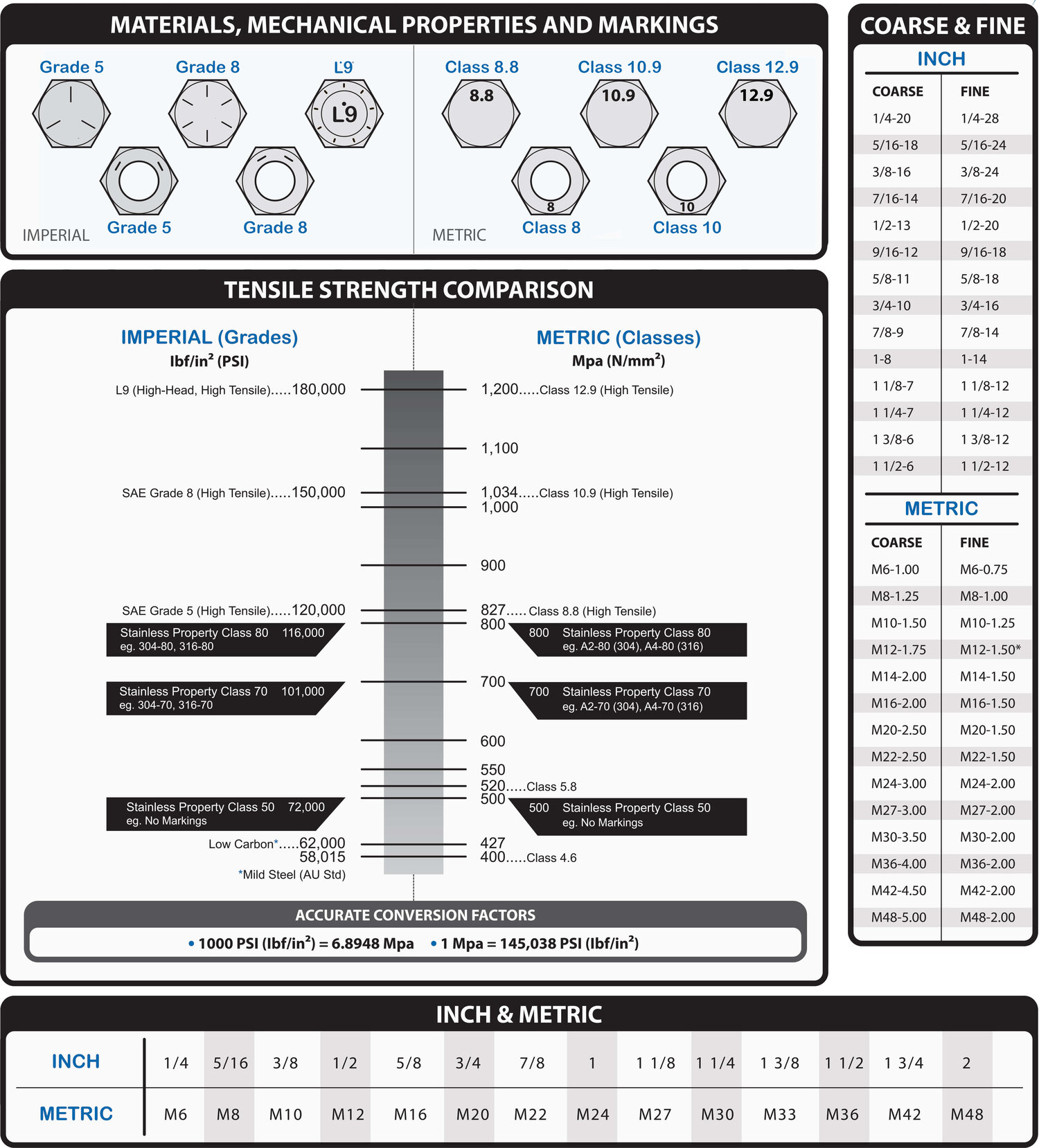
Load And Strength Considerations
The strength needed depends on the load the fastener will carry. This helps decide the diameter and grade of the bolt and nut.
| Load Type | Recommended Bolt Diameter | Recommended Nut Grade |
|---|---|---|
| Light Load | 6 mm | Grade 4.6 |
| Medium Load | 8 mm | Grade 8.8 |
| Heavy Load | 12 mm | Grade 10.9 |
Credit: www.mudgefasteners.com
Reading Size Charts
Nut and bolt size charts help you find the right parts for your projects. These charts show measurements and codes that describe each size.
Understanding these charts is key to choosing the correct nut or bolt. It saves time and ensures a good fit.
Interpreting Dimensions
Dimensions on size charts usually include diameter, thread pitch, and length. Diameter is the thickness of the bolt or nut.
Thread pitch tells how close the threads are to each other. Length measures how long the bolt is from head to tip.
| Dimension | Meaning | Example |
| Diameter | Width of the bolt or nut | 6 mm |
| Thread Pitch | Distance between threads | 1.0 mm |
| Length | Bolt length from head to tip | 30 mm |
Common Abbreviations
Size charts use abbreviations to save space. Knowing these helps you read charts quickly and correctly.
- Dia.- Diameter
- Thd.- Thread
- Len.- Length
- UNC- Unified National Coarse thread
- UNF- Unified National Fine thread
Tools For Measuring Nuts And Bolts
Measuring nuts and bolts is important to find the right size and fit. Using the correct tools helps avoid mistakes and ensures proper assembly.
There are special tools designed to measure the dimensions and thread types of nuts and bolts. These tools give accurate readings for smooth work.
Calipers And Gauges
Calipers measure the outer diameter, inner diameter, and depth of nuts and bolts. They can be digital or manual.
Gauges help check the thickness and size. Thread gauges check the pitch and shape of threads on bolts and nuts.
- Vernier calipers measure with high accuracy
- Dial calipers use a dial for easy reading
- Micrometer calipers measure small parts precisely
- Thread gauges identify thread pitch and angle
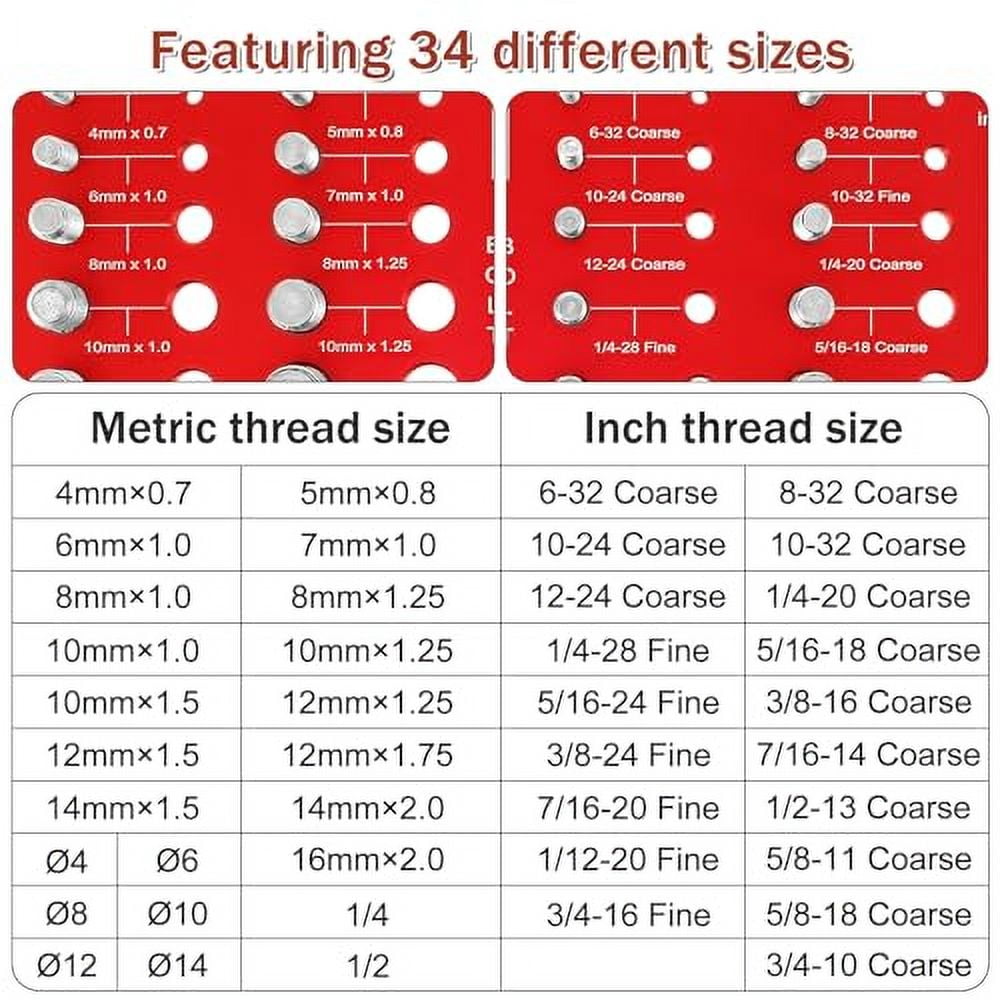
Thread Pitch Tools
Thread pitch tools measure the distance between threads on a bolt or nut. This helps to match nuts and bolts correctly.
These tools come in sets with different sizes for metric and imperial threads. They slide onto the threads to check the pitch.
- Metric thread pitch gauges measure in millimeters
- Imperial thread pitch gauges measure in threads per inch
- They help identify coarse and fine threads
- Easy to use with clear markings on blades

Credit: www.amazon.com
Applications And Industry Standards
Nut and bolt sizes vary widely depending on their use. Each industry follows specific standards to ensure safety and reliability.
Understanding these sizes helps choose the right fasteners for different applications.
Automotive
In automotive manufacturing, nuts and bolts must meet strict size and strength standards. They hold engine parts, chassis, and body panels together.
| Size (mm) | Thread Pitch | Common Use |
| M6 | 1.0 | Interior panels |
| M8 | 1.25 | Engine mounts |
| M10 | 1.5 | Suspension parts |
| M12 | 1.75 | Wheel hubs |
Construction
Construction projects require strong and durable fasteners. Nut and bolt sizes vary by structural need and load capacity.
- M12 and M16 sizes are common for steel frameworks.
- M20 bolts support heavy machinery and beams.
- Coarse thread bolts resist loosening in vibration-prone areas.
- Compliance with ASTM and ISO standards is essential.
Electronics
Electronics use small nuts and bolts to secure components and casings. Precision and size accuracy are critical.
| Size (mm) | Thread Pitch | Typical Use |
| M2 | 0.4 | Circuit boards |
| M3 | 0.5 | Device housings |
| M4 | 0.7 | Mounting brackets |
Tips For Accurate Selection
Selecting the right nut and bolt size is key for a safe fit. Use a size chart to find the exact measurements.
Check the thread pitch, diameter, and length before choosing. This prevents loose or tight fittings.
Avoiding Common Mistakes
Many people choose wrong sizes because they guess or skip measuring. Always measure parts carefully.
Do not mix metric and imperial sizes. This can cause damage or weak joints.
- Use a caliper or ruler for precise measurement
- Match thread type and pitch exactly
- Check size charts for standard dimensions
- Do not force nuts or bolts to fit
Maintenance And Replacement Guidelines
Regularly inspect nuts and bolts for wear or rust. Replace any damaged parts immediately.
Keep bolts clean and lubricated to avoid corrosion. Use anti-seize compounds if needed.
- Check tightness frequently to prevent loosening
- Replace bolts that show cracks or deformation
- Use the same grade and material for replacements
- Store nuts and bolts in dry, organized spaces

Credit: www.walmart.com
Frequently Asked Questions
What Are Standard Nut And Bolt Sizes?
Standard nut and bolt sizes vary by diameter and length. Common sizes include M6, M8, M10, and 1/4”, 3/8”. Sizes depend on thread pitch and application requirements.
How To Read A Nut And Bolt Size Chart?
A nut and bolt size chart shows diameter, thread pitch, and length. It helps choose the correct fastener for your project quickly and accurately.
Why Is Thread Pitch Important In Bolt Sizing?
Thread pitch defines the distance between threads. It affects bolt strength and compatibility with nuts. Matching pitch ensures secure fastening and prevents damage.
What Materials Are Common For Nuts And Bolts?
Nuts and bolts are often made from steel, stainless steel, brass, or alloy. Material choice depends on strength, corrosion resistance, and application environment.
Conclusion
Knowing nut and bolt sizes helps you pick the right parts fast. This chart makes choosing easy and clear. You save time and avoid mistakes. Always check sizes before starting any project. Use the chart as a quick guide anytime.
Correct sizes keep your work safe and strong. Simple tools need simple answers. Keep this chart handy for your next task. It’s a small step that makes a big difference.

