

Are your cabinet doors not closing properly or feeling loose? Installing new hinges can fix this quickly and give your cabinets a fresh, sturdy feel.
But if you’ve never done it before, the process might seem tricky. Don’t worry—you’re in the right place. This guide will walk you through every step, making it easy for you to install hinges like a pro. By the end, your cabinet doors will open and close smoothly, and you’ll feel proud of the work you’ve done yourself.
Ready to get started? Let’s dive in!
Tools And Materials Needed
Installing hinges on cabinet doors requires certain tools and materials. Getting them ready before starting saves time and effort.
This guide covers the types of hinges, essential tools, and safety gear you need for the job.
Types Of Hinges
There are several hinge types for cabinet doors. Choose one that fits your cabinet style and door weight.
- Butt Hinges: Common and easy to install, used on many cabinets.
- Concealed Hinges: Hidden when the door is closed for a clean look.
- Piano Hinges: Long hinges that run the full length of the door.
- Overlay Hinges: Used when the door overlays the cabinet frame.
Essential Tools
These tools help you install hinges correctly and quickly. Having them ready is important.
| Tool | Purpose |
|---|---|
| Drill | Make holes for screws and pilot holes |
| Screwdriver | Tighten or loosen screws |
| Measuring Tape | Measure hinge placement accurately |
| Level | Ensure door hangs straight |
| Chisel | Create recesses for hinges if needed |
| Pencil | Mark hinge positions on doors and frames |
Safety Gear
Safety gear protects you during the installation process. Use it every time you work with tools.
- Safety Glasses: Protect your eyes from dust and flying debris.
- Work Gloves: Prevent cuts and splinters on your hands.
- Ear Protection: Use when drilling or working with loud tools.
- Dust Mask: Avoid breathing in wood dust or other particles.
Credit: www.amazon.ca
Preparing The Cabinet Door
Installing hinges on cabinet doors needs careful preparation. This ensures the door fits well and works smoothly.
Start by getting the door ready. Measure and mark where the hinges will go. Then drill pilot holes to avoid splitting the wood.
Measuring And Marking
Measure the exact spots for the hinges on the cabinet door. Use a tape measure to get accurate distances from edges.
Mark the spots with a pencil. Make light marks to avoid visible damage. Usually, hinges go about 3 inches from the top and bottom edges.
- Use a ruler or tape measure
- Mark 3 inches from top and bottom edges
- Make small pencil marks for hinge placement
- Check both door and cabinet frame for alignment
Drilling Pilot Holes
Drill small pilot holes where you marked the hinge spots. Pilot holes guide screws and prevent wood from splitting.
Choose a drill bit slightly smaller than the screw width. Drill straight and to the right depth for a secure fit.
- Select a drill bit smaller than the screw diameter
- Hold the drill steady and perpendicular to the door surface
- Drill only as deep as the screw length
- Repeat for all hinge screw holes
Attaching Hinges To The Door
Attaching hinges to cabinet doors is a key step in door installation. Proper hinge placement helps the door open smoothly.
This guide explains how to position hinges and secure them with screws on the door.
Positioning The Hinges
Start by deciding where to place the hinges on the door edge. Usually, one hinge goes near the top and another near the bottom.
Measure about 3 inches from the top and bottom edges for hinge placement. Mark these spots lightly with a pencil.
- Place the top hinge about 3 inches from the top edge
- Place the bottom hinge about 3 inches from the bottom edge
- If using a third hinge, position it in the center
Securing With Screws
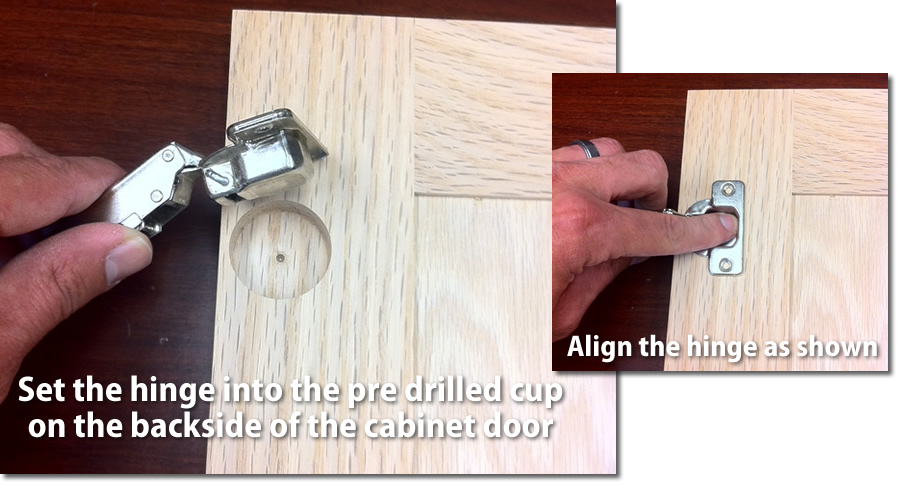
Hold the hinge in place on the marked spot. Align the hinge holes with the marks on the door.
Use a drill or screwdriver to insert screws through the hinge holes into the door. Tighten screws firmly but do not strip them.
- Use screws that fit the hinge holes properly
- Drive screws straight to avoid damage
- Check hinge movement after attaching screws
Credit: u-install-itkitchens.com.au
Mounting The Door To The Cabinet Frame
Installing hinges on cabinet doors can seem tricky at first. This guide helps you mount the door to the cabinet frame with ease.
Follow these simple steps to ensure your cabinet doors open and close smoothly. Proper alignment and attachment are key to success.
Aligning The Door
Proper alignment ensures the door fits well and closes properly. Begin by holding the door against the frame.
Make sure the top and bottom edges of the door are level with the cabinet. Use a level tool if needed.
- Check that the gaps around the door are even.
- Adjust the door's position until it is straight.
- Mark the hinge positions on the frame and door.
Attaching Hinges To The Frame
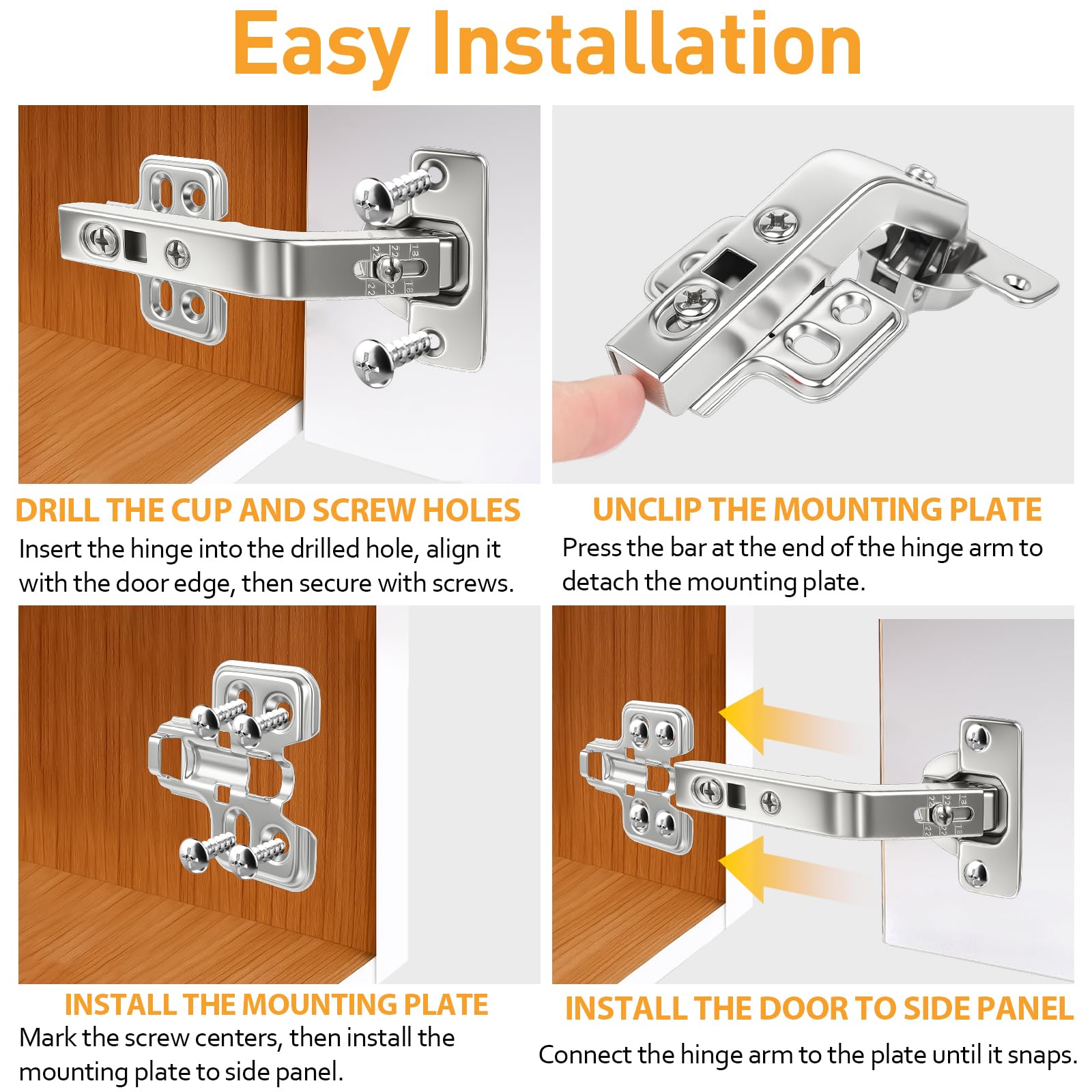
Once the door is aligned, it's time to attach the hinges. Use a drill to make pilot holes where you marked earlier.
Secure the hinges to the cabinet frame with screws. Make sure the screws are tight but do not over-tighten them.
- Place the hinge on the door's edge.
- Insert screws into the pilot holes on the frame.
- Repeat for each hinge on the door.
Adjusting Door Alignment
Proper door alignment ensures your cabinet doors open and close smoothly. Adjusting hinges helps fix uneven gaps and makes doors level.
Small changes to hinge screws can improve the door’s position without removing it completely. This guide explains how to check gaps and fine-tune hinges.
Checking Gaps And Level
Start by looking at the space between the cabinet door and the frame. Gaps should be even on all sides. Use a level tool to check if the door is straight.
- Close the door gently and observe the gaps.
- Look for any spots where the door touches or is too far from the frame.
- Place a level on the door edge to check if it tilts forward or backward.
- Note any uneven areas before adjusting hinges.
Fine-tuning Hinge Screws
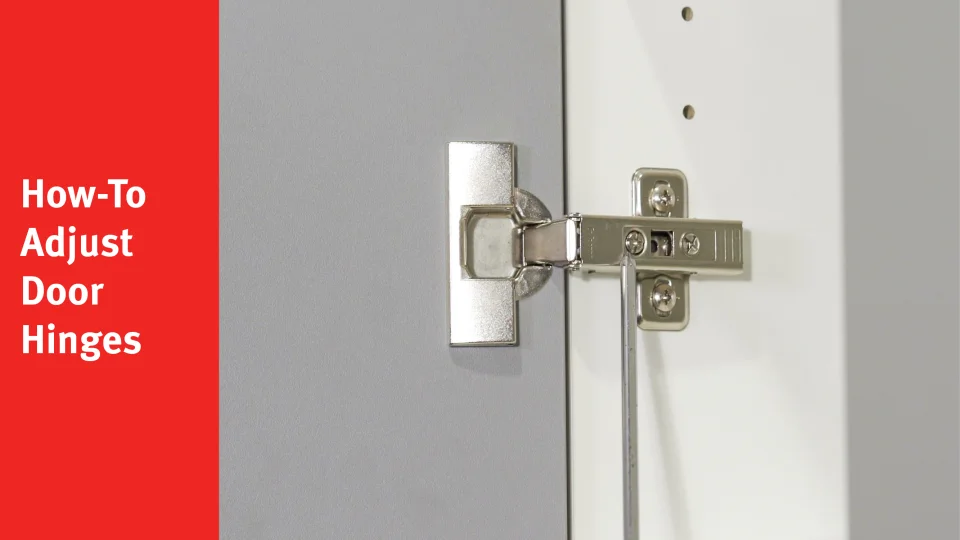
Hinges usually have screws for adjusting the door’s position side to side, up and down, or in and out. Turn these screws in small amounts to improve alignment.
| Adjustment | Effect | How to Adjust |
| Side to Side | Moves door left or right | Turn the side adjustment screw on the hinge |
| Up and Down | Raises or lowers the door | Loosen screws on the mounting plate and slide door |
| In and Out | Moves door closer or away from frame | Adjust the depth screw on the hinge |
Common Issues And Fixes
Installing hinges on cabinet doors can be tricky. Some common problems can happen during or after installation. Fixing these issues helps the doors work smoothly and look good.
This guide covers three common problems: loose hinges, misaligned doors, and squeaky hinges. Each section explains how to fix these issues.
Loose Hinges
Loose hinges make cabinet doors wobble and not close properly. This problem usually happens because screws become loose or the wood around the screws is damaged.
- Check if the screws are tight. Use a screwdriver to tighten them firmly.
- If screws spin without tightening, the wood may be stripped. Use longer screws or insert wooden toothpicks with glue in the hole before screwing.
- Replace old or rusty screws to ensure a strong hold.
- For damaged wood, consider using a wood filler and let it dry before reattaching the hinge.
Misaligned Doors
Misaligned doors do not close evenly or leave gaps. This usually happens if hinges are not placed correctly or the door has shifted over time.
| Problem | Cause | Fix |
| Door too high or low | Hinges not mounted straight | Loosen screws and adjust hinge up or down |
| Door sticks or rubs cabinet frame | Hinge placement off or door warped | Move hinge slightly or plane door edge |
| Uneven gaps between doors | Hinges misaligned or door warped | Adjust hinges or replace warped door |
Squeaky Hinges
Squeaky hinges make noise when you open or close the door. This sound means the hinge needs lubrication or cleaning.
To fix squeaky hinges, follow these steps:
- Open the cabinet door wide.
- Clean the hinge with a dry cloth to remove dust and dirt.
- Apply a few drops of oil or silicone spray to the hinge joints.
- Open and close the door several times to spread the lubricant.
- Wipe off any excess oil to avoid stains.

Credit: www.amazon.com
Frequently Asked Questions
What Tools Are Needed To Install Cabinet Door Hinges?
You need a drill, screwdriver, measuring tape, pencil, and hinges. These tools ensure precise hinge placement and secure attachment.
How Do I Align Hinges On Cabinet Doors?
Measure carefully and mark hinge positions on the door and frame. Use a level to ensure even alignment before screwing hinges in place.
Can I Install Hinges Without Removing Cabinet Doors?
Yes, but it’s easier to remove doors first. Removing doors allows better access and more accurate hinge installation.
What Types Of Hinges Work Best For Cabinet Doors?
Concealed, overlay, and inset hinges are common. Choose based on door style and desired appearance for a seamless look.
Conclusion
Installing hinges on cabinet doors is simple with clear steps. Measure and mark carefully to ensure proper placement. Use the right tools for a secure fit. Take your time to avoid mistakes. Check the door’s movement after installation. Small adjustments can make a big difference.
Practice helps you gain confidence and skill. Enjoy your neatly hung cabinet doors and improved space. Keep these tips in mind for future projects.

