

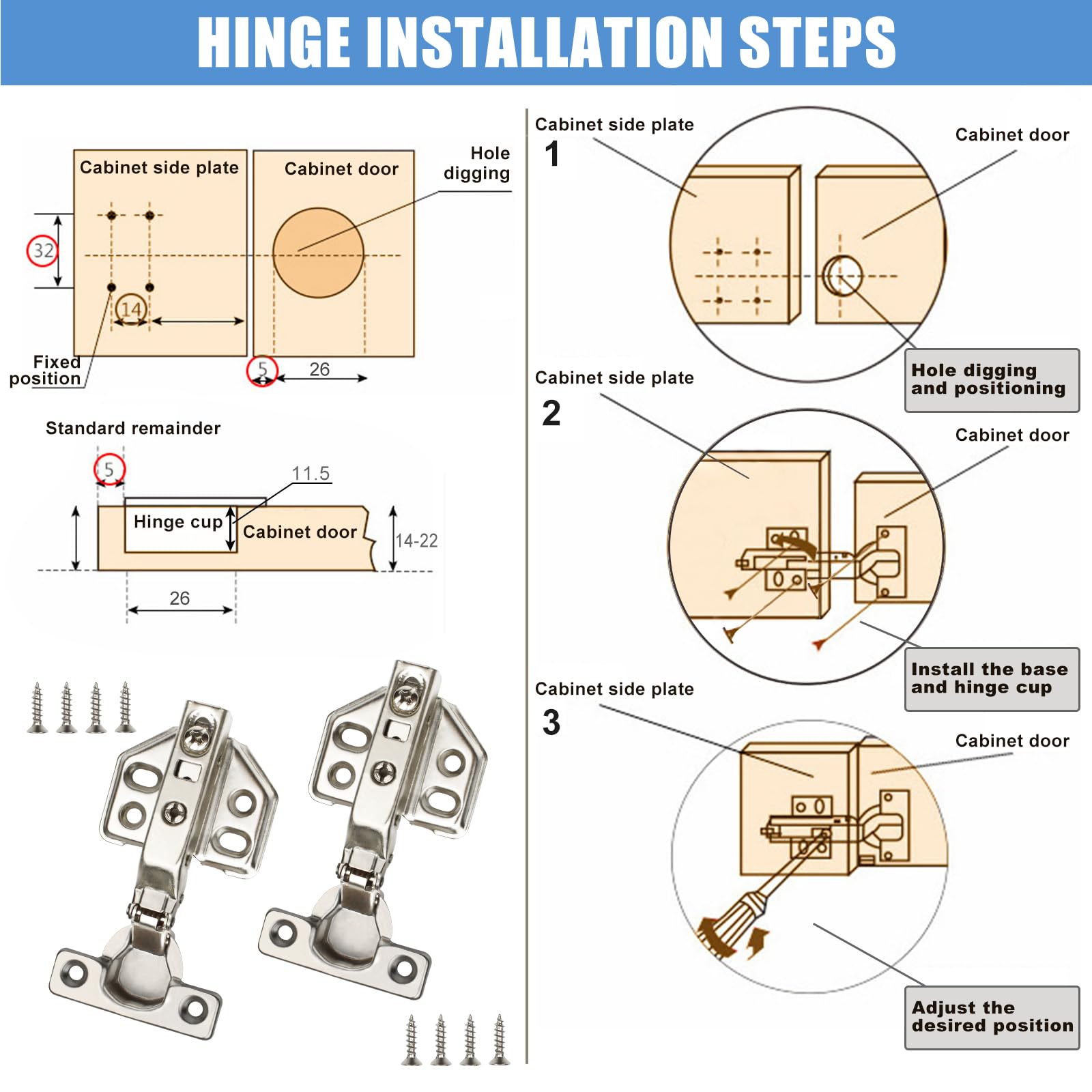
Are your cabinet doors sagging or making noise? Maybe it’s time to replace or install new hinges.
You might think this is a tough job, but with the right steps, you can do it yourself quickly and easily. Imagine opening your cabinets smoothly every time, without any hassle. This guide will walk you through everything you need to know to install cabinet door hinges like a pro.
Keep reading, and you’ll gain the confidence to fix your cabinets today!
Choosing The Right Hinges
Choosing the right cabinet door hinges is key for a smooth installation. The right hinges make doors open and close properly.
You must consider the type, material, and size of the hinges to fit your cabinet doors well.
Types Of Cabinet Hinges
There are several types of hinges to choose from. Each type works for different cabinet styles and door fits.
- Concealed hinges: Hidden when the door is closed. Common in modern kitchens.
- Overlay hinges: Show outside the cabinet frame. Easy to install.
- Inset hinges: Fit inside the cabinet frame for a flush look.
- Piano hinges: Long hinges that run the full length of the door.
Material And Finish Options
Materials affect hinge strength and durability. Finishes match your cabinet style and protect against rust.
| Material | Features | Common Finish |
| Steel | Strong, durable | Nickel, chrome |
| Brass | Rust-resistant, decorative | Polished, antique |
| Stainless Steel | Rust-proof, strong | Brushed, satin |
| Zinc Alloy | Cost-effective, light | Chrome, bronze |
Measuring For Proper Fit
Correct measurements ensure hinges fit and work well. Measure door thickness and overlay carefully.
- Measure door thickness at the thickest point.
- Check cabinet frame depth where hinges will mount.
- Measure overlay distance if using overlay hinges.
- Note hinge cup diameter and depth for concealed hinges.
- Compare measurements to hinge product specs before buying.
Gathering Tools And Materials
Installing cabinet door hinges is a simple task that needs the right tools. Gathering everything before you start helps you work faster.
This guide explains the tools and materials you need to install cabinet door hinges correctly.
Essential Tools Needed
You need some basic tools to install hinges. These tools help you measure, mark, and fix the hinges firmly.
- Drill with drill bits
- Screwdriver (manual or electric)
- Measuring tape or ruler
- Pencil or marking tool
- Level to check alignment
- Clamps to hold doors in place
Having these tools ready makes the installation smooth and accurate.
Additional Supplies
Besides tools, you need some supplies to complete the job. These include the hinges and screws that fit your cabinet doors.
- Cabinet door hinges (choose the right type)
- Screws matching the hinges
- Wood filler (optional, for fixing old screw holes)
- Sandpaper (optional, for smoothing surfaces)
- Masking tape (optional, to protect surfaces while marking)
Collecting these supplies before you start saves time and prevents interruptions.
Preparing The Cabinet Doors
Preparing your cabinet doors is important before installing new hinges. This helps the hinges fit well and work smoothly.
Start by checking the doors and cleaning the surfaces. Make sure the doors are ready for the new hardware.
Removing Old Hinges
Remove the screws that hold the old hinges on the door. Use a screwdriver that fits well to avoid damage.
Take off the old hinges carefully. Keep the screws if you want to reuse them or replace them with new ones.
Marking Hinge Placement
Mark where the new hinges will go on the cabinet door. Use a pencil for light, easy-to-remove marks.
Check that the marks line up with the cabinet frame. This helps the doors hang evenly and open smoothly.
- Measure the same distance from the top and bottom edges
- Use a ruler or tape measure for accuracy
- Mark screw holes for the new hinges clearly

Credit: www.amazon.ca
Installing The Hinges
Installing cabinet door hinges is an important step for proper door function. You need to attach hinges carefully to avoid misalignment.
This guide covers two main tasks: attaching hinges to doors and securing hinges to the cabinet frame.
Attaching Hinges To Doors
Start by positioning the hinge on the edge of the cabinet door. Make sure it is aligned with the door’s surface and mark the screw holes with a pencil.
- Hold the hinge firmly in place on the door edge.
- Mark the holes for screws using a pencil or marker.
- Pre-drill small pilot holes to avoid splitting the wood.
- Screw the hinge to the door using a screwdriver or drill.
- Check that the hinge moves freely without binding.
Securing Hinges To Cabinet Frame
After attaching hinges to the door, you must secure them to the cabinet frame. Proper alignment here ensures smooth door operation.
| Task | Tips |
| Position hinge on cabinet frame | Align hinge with cabinet edge and level it carefully |
| Mark screw holes | Use a pencil to mark holes through hinge plates |
| Pre-drill holes | Drill pilot holes to prevent wood cracking |
| Fasten screws | Use a screwdriver to attach hinge firmly |
| Test door movement | Open and close door to check hinge function |
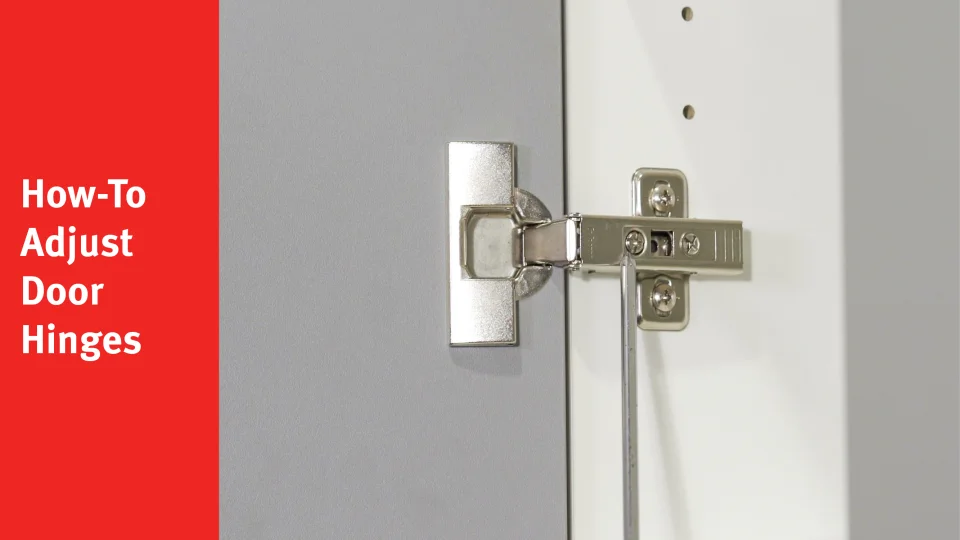
Adjusting Door Alignment
Proper door alignment is key for cabinet doors to open and close smoothly. Adjusting the hinges helps fix uneven gaps and misaligned doors.
Use the hinge screws to move the door slightly until it fits perfectly. Small adjustments can make a big difference.
Fine-tuning Door Position
Start by loosening the screws on the hinge slightly. Move the door up, down, left, or right to get the best fit.
Tighten the screws again once the door looks even with the cabinet frame. Check the gaps around the door edges.
- Use a screwdriver to adjust the hinge screws
- Move the door slowly for small changes
- Check the door edges for even spacing
- Tighten screws securely after adjustment
Checking Door Functionality
Open and close the door several times. Make sure it swings without rubbing or sticking.
Listen for any sounds like scraping or squeaking. These can show where further adjustments are needed.
- Check that the door closes flush with the cabinet
- Look for smooth movement without resistance
- Adjust hinges again if the door is tight or loose
- Ensure the door stays in place when opened
Troubleshooting Common Issues
Installing cabinet door hinges can sometimes lead to problems. Misaligned doors and loose hinges are common issues. Understanding how to fix these can save time and effort.
This guide helps you solve these problems with simple steps. Follow along to ensure your cabinet doors work perfectly.
Fixing Misaligned Doors
Misaligned doors make cabinets look uneven. This often happens when hinges are not level. To fix this, you need to adjust the hinges.
- Check if the screws are tight on all hinges.
- Loosen the screws slightly to adjust the door position.
- Align the door with the cabinet frame.
- Tighten the screws to secure the door in place.
Dealing With Loose Hinges
Loose hinges cause doors to sag or not close properly. This can wear out the cabinet over time. Fixing loose hinges is simple with a screwdriver.
Tighten the screws on each hinge. If the screws are stripped, replace them with slightly longer ones. This will hold the hinges firmly.
- Inspect the screws for wear or damage.
- Use a screwdriver to tighten loose screws.
- Replace damaged screws with new ones.
- Test the door to ensure it closes properly.
Maintaining Cabinet Hinges
Cabinet hinges play a vital role in the smooth operation of your cabinets. Proper maintenance ensures they last long and function well.
Regular care of cabinet hinges involves cleaning and lubrication. Knowing when to replace them is also essential.
Cleaning And Lubrication Tips
Dust and dirt can affect hinge movement. Clean them regularly for smooth operation.
Use a soft cloth to wipe away dust. Apply a light oil to keep hinges moving easily.
- Remove dirt with a damp cloth
- Use mild soap for sticky grime
- Apply oil to hinge joints
- Wipe off extra oil to avoid stains
When To Replace Hinges
Sometimes, cleaning and oiling are not enough. Hinges may need replacing if they are damaged.
Inspect hinges for rust, bends, or cracks. These are signs that a replacement is necessary.
- Rust that cannot be cleaned
- Hinges that are bent
- Cracks in the metal
- Doors that do not close properly

Credit: www.youtube.com
Credit: u-install-itkitchens.com.au
Frequently Asked Questions
What Tools Are Needed To Install Cabinet Door Hinges?
You need a drill, screwdriver, measuring tape, pencil, and hinges. A level and clamps can help. These tools ensure precise hinge placement and secure installation.
How Do You Align Cabinet Door Hinges Correctly?
Measure and mark hinge positions on both the door and frame. Use a level to ensure alignment. Attach hinges with screws carefully to avoid misalignment or door sagging.
Can I Install Cabinet Door Hinges Without Removing The Door?
Yes, you can install hinges with the door attached. However, removing the door allows easier and more accurate hinge placement. It’s safer and prevents damage.
What Types Of Cabinet Door Hinges Are Best For Installation?
Concealed hinges are popular for a clean look. Overlay and inset hinges suit different door styles. Choose hinges based on your cabinet design and door thickness.
Conclusion
Installing cabinet door hinges can be simple and quick. Follow each step carefully for best results. Use the right tools to avoid mistakes. Check alignment often to ensure smooth door movement. Take your time and work patiently. This skill saves money on repairs and upgrades.
Enjoy your newly installed cabinet doors every day. Practice makes perfect, so try again if needed. This small project boosts your home’s look and function.

