

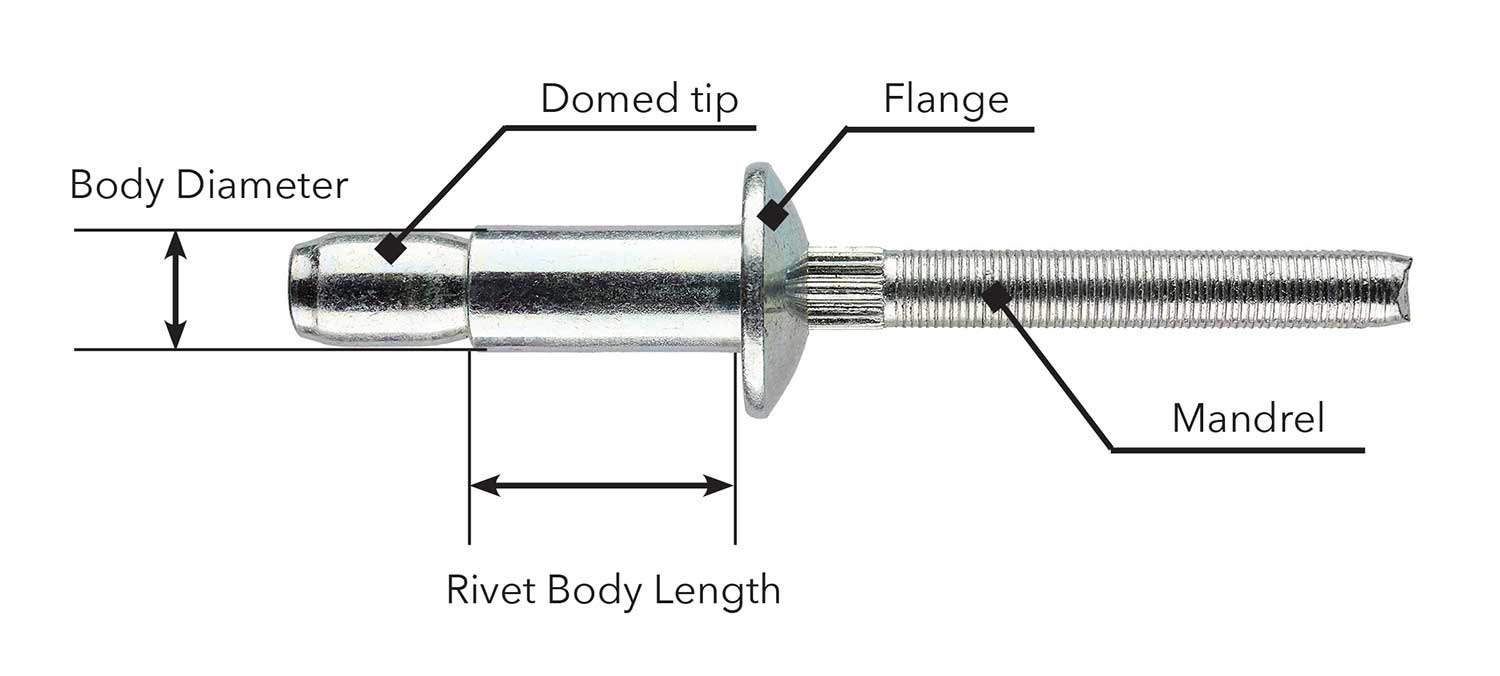
Choosing the right rivet size for steel might seem simple, but it can make all the difference in your project’s strength and durability. If you pick a rivet that’s too small, your work could come apart.
Too big, and you might damage the steel or waste materials. You want your steel joints to hold firm under pressure, right? This guide will walk you through the key steps to select the perfect rivet size every time. By the end, you’ll feel confident making the best choice for your steel projects, saving you time and avoiding costly mistakes.
Keep reading to learn exactly what you need to know.

Credit: rivetlab.com
Factors Affecting Rivet Size
Choosing the right rivet size is important for strong and safe steel connections. Several factors affect which rivet size will work best. Understanding these helps you pick a rivet that fits the job.
This guide covers the main factors to consider when selecting rivet size for steel. It focuses on material thickness, load requirements, and hole diameter.
Material Thickness
The thickness of the steel pieces being joined is the first key factor. The rivet must be long enough to pass through all layers and form a secure hold.
| Material Thickness (mm) | Recommended Rivet Length (mm) |
| 1 - 3 | 6 - 8 |
| 3 - 6 | 8 - 12 |
| 6 - 10 | 12 - 16 |
| 10+ | 16+ |
Load Requirements
Load refers to the force the rivet must hold without failing. Stronger loads need larger diameter rivets to handle stress.
- Higher shear loads require bigger rivet diameters.
- Consider tension and vibration when choosing size.
- Use manufacturer data to match rivet size with expected load.
Hole Diameter
The rivet size must match the hole diameter closely. Too small rivets will not fit, and too large ones can loosen the joint.
| Hole Diameter (mm) | Suitable Rivet Diameter (mm) |
|---|---|
| 3.0 - 3.5 | 3.0 |
| 4.0 - 4.5 | 4.0 |
| 5.0 - 5.5 | 5.0 |
| 6.0 - 6.5 | 6.0 |

Credit: www.amazon.ca
Common Rivet Types For Steel
Rivets are essential fasteners in steel construction. They hold materials together securely. Choosing the right type of rivet is important for strength and durability.
Different rivet types are suitable for various applications. This guide helps you understand the common rivet types used for steel.
Solid Rivets
Solid rivets are widely used in steel structures. They are known for their strength and reliability. These rivets require access from both sides of the material for installation.
- Used in heavy-duty applications
- Require hammering for installation
- Offer high shear strength
Blind Rivets
Blind rivets are ideal for situations where only one side is accessible. They are easy to install and versatile, making them popular in various industries.
| Material | Application |
| Aluminum | Lightweight structures |
| Steel | Heavy-duty applications |
| Copper | Electrical components |
Semi-tubular Rivets
Semi-tubular rivets have a partially hollow shank. They are used in applications where a quicker assembly is needed. These rivets reduce the force needed for installation.
Measuring Rivet Diameter
Choosing the right rivet size is important for strong steel joints. Measuring the rivet diameter helps you pick the correct size for your project. Accurate measurement ensures a secure fit and lasting hold.
This guide covers two simple methods to measure rivet diameter. Both methods are easy and use common tools.
Using Calipers
Calipers are precise tools for measuring the diameter of a rivet. Use a digital or dial caliper for the best results. Place the rivet between the caliper jaws and gently close them until they touch the rivet. Read the measurement on the scale.
- Hold the rivet firmly to avoid slipping.
- Measure across the widest part of the rivet head or shaft.
- Repeat the measurement twice for accuracy.
- Record the measurement in millimeters or inches.
Matching Hole Size
The rivet diameter should match the hole size in the steel pieces. The hole must be slightly larger than the rivet for easy insertion but not too loose. This fit helps the rivet hold the parts tightly together.
| Hole Diameter | Recommended Rivet Diameter |
| 3 mm | 2.8 mm to 3 mm |
| 5 mm | 4.8 mm to 5 mm |
| 8 mm | 7.8 mm to 8 mm |
| 10 mm | 9.8 mm to 10 mm |

Credit: www.reddit.com
Determining Rivet Length
Choosing the right rivet length is key for a strong steel joint. The length depends on the thickness of the materials being joined and the grip needed.
This guide explains how to calculate the rivet length based on sheet thickness and grip allowances.
Sheet Thickness Calculation
Measure the total thickness of the steel sheets to be joined. Add the thickness of each sheet together to get the combined thickness. This total is the base for choosing rivet length.
| Sheet 1 Thickness | Sheet 2 Thickness | Total Thickness |
| 3 mm | 4 mm | 7 mm |
| 5 mm | 5 mm | 10 mm |
| 2 mm | 6 mm | 8 mm |
Allowances For Grip
Add extra length for the rivet to properly grip the materials. This allowance ensures the rivet forms a secure head after installation.
- Grip length is usually 1.5 to 2 times the rivet diameter.
- Check manufacturer guidelines for exact grip allowances.
- Allow extra length if coatings or paint layers exist.
- Too short rivets may fail to hold sheets tightly.
Tools For Accurate Rivet Sizing
Choosing the right rivet size for steel requires precise measurement tools. These tools help ensure a strong and safe joint.
Two common tools used for accurate rivet sizing are rivet gauges and thickness gauges. Each tool serves a specific purpose.
Rivet Gauges
Rivet gauges measure the diameter and length of rivets. They help find the correct size to fit holes and hold steel pieces tightly.
- Check the rivet diameter to match hole size
- Measure rivet length for proper grip range
- Use gauges that show standard rivet sizes
- Compare rivet head types with gauge markings
Thickness Gauges
Thickness gauges measure the combined thickness of steel sheets before riveting. This helps pick a rivet long enough to hold the layers together.
| Gauge Type | Use | Measurement Range |
|---|---|---|
| Feeler Gauge | Measures small gaps and thin layers | 0.001 to 0.035 inches |
| Thickness Gauge | Measures steel sheet thickness accurately | 0.01 to 0.5 inches |
| Digital Thickness Gauge | Provides quick digital readings | 0 to 1 inch |
Common Mistakes In Rivet Sizing
Choosing the right rivet size for steel is important for a strong hold. Many people make mistakes that weaken the joint. This guide covers two common errors in rivet sizing.
Using the wrong rivet size can cause problems like loose fittings or damaged materials. Avoid these mistakes to ensure your project lasts.
Oversized Rivets
Oversized rivets are too large for the hole or material thickness. They can cause damage during installation and reduce joint strength.
- Hard to insert, risking material deformation
- Can crack or split the steel around the hole
- May not close properly, leading to weak joints
- Increase installation time and effort
Always measure the hole diameter and material thickness before selecting the rivet size. The rivet diameter should match the hole size closely.
Undersized Rivets
Undersized rivets are smaller than needed for the hole or material. This causes loose connections and poor structural integrity.
| Issue | Effect |
|---|---|
| Rivet Diameter Too Small | Loose fit, vibration loosens joint |
| Rivet Length Too Short | Cannot form a proper head, weak connection |
| Wrong Material Thickness Fit | Rivet does not fill the hole, poor grip |
Check both diameter and length when choosing rivets. Use charts or guides to match rivet size to steel thickness for best results.
Tips For Ensuring Perfect Fit
Choosing the right rivet size is key for strong steel joints. A perfect fit prevents damage and keeps parts secure.
This guide covers trial assembly and consulting manufacturer charts to help you pick the right rivet size.
Trial Assembly
Trial assembly lets you test the rivet size before final installation. It shows if the rivet fits well in the hole and holds parts tightly.
- Insert the rivet into the steel holes without fixing it permanently.
- Check for any gaps between the rivet and hole wall.
- Try to move the rivet; it should not wiggle or feel loose.
- Ensure the rivet head covers the hole surface evenly.
- Use a rivet setting tool to simulate final fixing.
If the rivet is loose or too tight, try a different size. Trial assembly helps avoid costly mistakes.
Consulting Manufacturer Charts
Manufacturer charts list rivet sizes with matching hole diameters and steel thickness. Use these charts to find the best fit quickly.
| Rivet Diameter (mm) | Hole Diameter (mm) | Steel Thickness Range (mm) |
| 3.2 | 3.3 | 1.0 - 3.0 |
| 4.0 | 4.1 | 1.5 - 4.0 |
| 4.8 | 4.9 | 2.0 - 5.0 |
| 6.4 | 6.5 | 3.0 - 6.0 |
Refer to these values to match rivet size with your steel parts. Always double-check for your specific project needs.
Frequently Asked Questions
What Factors Determine The Right Rivet Size For Steel?
Rivet size depends on steel thickness, joint type, and load requirements. Choose a rivet diameter slightly larger than hole size. Consider material strength and shear forces for durability and safety.
How To Measure Steel Thickness For Rivet Selection?
Use a caliper or micrometer to measure steel thickness accurately. Measure at multiple points for consistency. The total thickness guides rivet length and diameter choice.
What Is The Impact Of Rivet Length On Steel Joints?
Rivet length must match the combined thickness of steel pieces. Proper length ensures a secure grip without excessive protrusion. Too short or long rivets weaken joint strength.
Can Rivet Size Affect Steel Joint Strength?
Yes, correct rivet size ensures optimal shear strength and load distribution. Undersized rivets risk failure; oversized ones may damage steel or reduce holding power.
Conclusion
Choosing the right rivet size keeps steel joints strong and safe. Check the steel thickness and hole size first. Pick a rivet that fits snugly without forcing it. Too small or too big can cause problems later. Always follow the project’s instructions and use proper tools.
Good rivet choices help your steel last longer. Simple steps make your work easier and more reliable. Keep these tips in mind for better results every time.

