

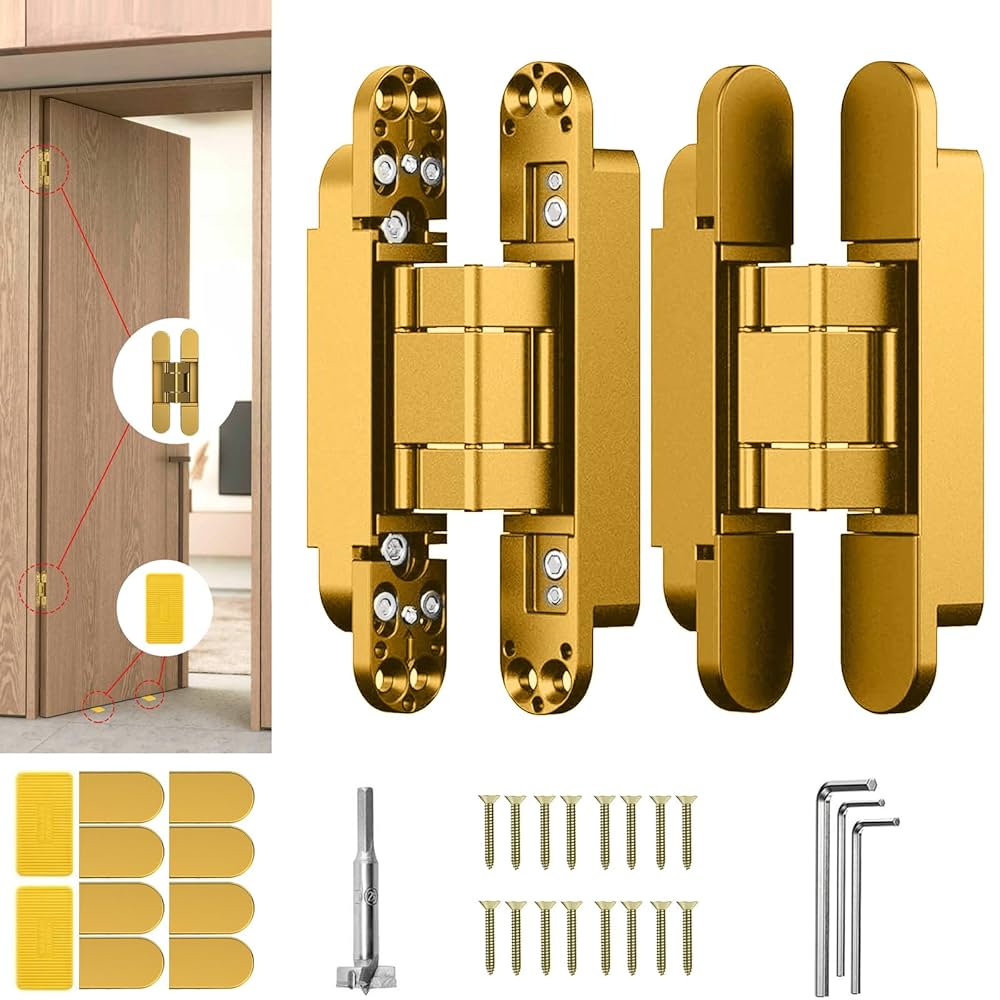
Imagine having a door that blends seamlessly into your wall, almost like magic. No visible hinges, no obvious frame—just a smooth, clean surface that keeps your space looking sleek and modern.
If you’ve ever wanted to add that touch of mystery and elegance to your home or office, hidden hinges for hidden doors are exactly what you need. You’ll discover how these clever fittings can transform your space, improve security, and elevate your design.
Ready to unlock the secret behind hidden doors? Let’s dive in.

Credit: www.amazon.com
Benefits Of Hidden Hinges
Hidden hinges are special hinges placed inside doors. They make the door look clean and smooth. These hinges help doors blend with walls or frames. They are great for hidden doors.
Using hidden hinges gives many advantages. They improve how doors look and work. Let’s explore the main benefits of hidden hinges.
Aesthetic Appeal
Hidden hinges do not show on the door edges. This makes doors look neat and seamless. They help create a modern and clean design style.
With hidden hinges, doors can match walls perfectly. They do not interrupt the surface or design. This adds beauty to any room or space.
Space Optimization
Hidden hinges allow doors to open fully without extra space. They fit inside the door frame, saving room around the door. This is useful in small areas.
These hinges make doors easier to use in tight places. You can place furniture closer to doors. This helps keep rooms less crowded and more open.
Enhanced Security
Hidden hinges are hard to see and reach from outside. This makes it difficult to tamper with the door. They add an extra layer of security to hidden doors.
Since the hinges are inside, they protect the door from damage. This helps keep the door strong and safe for longer time.
Types Of Hidden Hinges
Hidden hinges make doors look clean and smooth. They fit inside the door and frame. This hides the hinge from view.
There are several types of hidden hinges. Each type works best for different door styles and weights.
Pivot Hinges
Pivot hinges attach the door at the top and bottom. They let the door swing open in both directions. These hinges do not need a frame to attach.
They are strong and good for heavy doors. Pivot hinges also allow for smooth, wide door openings.
Concealed Hinges
Concealed hinges are hidden inside the door and frame. They are common in modern cabinetry and furniture. These hinges give a clean look without visible hardware.
- Allow full door overlay
- Adjustable for perfect door alignment
- Soft-close options available
- Easy to install and remove
European Hinges
European hinges are a type of concealed hinge. They attach inside a hollow cavity in the door. These hinges offer wide opening angles and good adjustability.
| Feature | Details |
|---|---|
| Mount Type | Clip-on or screw-on |
| Opening Angle | 90 to 165 degrees |
| Adjustability | Height, depth, and side |
| Application | Cabinet and hidden doors |
Materials And Finishes
Hidden hinges are key to making doors look smooth and seamless. The choice of materials and finishes affects how strong and nice the hinges look.
Good materials last longer and keep the door working well. Finishes protect the metal and add style to match your space.
Metal Options
Metal is the main material for hidden hinges. It needs to be strong and resistant to wear. Common metals include steel, brass, and stainless steel.
Steel is very strong and affordable. Brass offers a classic look and good corrosion resistance. Stainless steel is great for moist areas because it does not rust.
- Steel: durable and cost-effective
- Brass: elegant and corrosion-resistant
- Stainless steel: rust-proof and strong
Wood And Composite
Hidden door hinges often attach to wood or composite doors. Wood types like oak, maple, or walnut provide a solid base for hinges.
Composite materials mix wood fibers and plastic. They resist warping and moisture better than natural wood. Both materials need proper finishing to protect the hinge area.
- Oak: hard and durable
- Maple: smooth and strong
- Walnut: rich color and tough
- Composite: moisture-resistant and stable
Finish Choices
Finishes protect hinges from rust and wear. They also help the hinge blend in with the door or wall.
Popular finishes include powder coating, plating, and painting. Each finish offers different colors and levels of protection.
- Powder coating: tough and colorful
- Plating: shiny and corrosion-resistant
- Painting: flexible color options
Installation Techniques
Installing hidden hinges for hidden doors requires care and precision. These hinges keep doors flush with walls and create a clean look.
Understanding the right tools and steps helps ensure a smooth installation process. Avoid common errors to get the best results.
Tools Required
You need specific tools to install hidden hinges correctly. Using the right tools makes the job easier and more accurate.
- Measuring tape for precise measurements
- Pencil to mark hinge locations
- Chisel to create hinge recesses
- Drill with bits for pilot holes
- Screwdriver to fix hinges in place
- Level to ensure door alignment
- Clamps to hold the door steady
Step-by-step Process
Follow these steps to install hidden hinges on your door. Take your time to measure and adjust for a perfect fit.
- Measure and mark hinge positions on the door and frame.
- Chisel out shallow recesses for the hinges on both door and frame.
- Drill pilot holes for screws to avoid splitting the wood.
- Attach hinges to the door first, using screws.
- Position the door in the frame and clamp it securely.
- Fix hinges to the door frame, ensuring the door is level.
- Test the door movement and adjust if needed.
Common Mistakes
Avoid these common mistakes to ensure your hidden door works well. Small errors can cause big problems later.
- Not measuring carefully before cutting recesses
- Making hinge recesses too deep or too shallow
- Skipping pilot holes, which can split the wood
- Failing to keep the door level during installation
- Using the wrong screws or hardware
- Not testing door movement before final fixing
Design Ideas For Hidden Doors
Hidden doors add a secret and stylish touch to any room. They blend into the wall or furniture, making the space more interesting.
Using hidden hinges, these doors open smoothly without visible hardware. You can use many designs to make hidden doors fit your style.
Bookshelf Doors
Bookshelf doors look like regular shelves filled with books. They hide a door behind the books while acting as storage.
These doors are perfect for libraries or home offices. Hidden hinges let the door swing open without spoiling the shelf look.
- Use real or fake books to cover the door
- Add lighting to highlight the shelf
- Keep the shelves sturdy for daily use
- Match the shelf color with the room
Mirror Doors
Mirror doors hide rooms while reflecting light. They make spaces look bigger and brighter.
These doors work well in bedrooms or closets. Hidden hinges keep the mirror frame clean and smooth.
- Choose frameless mirrors for a sleek look
- Use shatterproof glass for safety
- Install soft-close hinges for quiet use
- Keep the mirror clean to maintain the effect
Wall Panel Doors
Wall panel doors blend into paneled walls. They create a seamless look with no clear door outline.
This design is good for modern or classic rooms. Hidden hinges keep the panels aligned perfectly when opening.
- Match the door panel design with wall panels
- Use paint or wood stain to hide the door
- Install flush handles for a clean surface
- Check hinge strength for heavy doors

Credit: www.amazon.com
Choosing The Right Hidden Hinges
Hidden hinges keep doors looking clean and smooth. They are perfect for hidden doors in walls or cabinets. Picking the right hinge helps your door work well and last long.
There are key points to think about before buying hidden hinges. These include the weight and size of the door, your budget, and how much you want to change the hinge style.
Weight And Size Considerations
Heavy or large doors need strong hidden hinges. Small doors can use lighter hinges. The hinge must hold the door without bending or breaking.
| Door Weight | Recommended Hinge Strength |
| Up to 20 kg | Light-duty hinges |
| 20 kg to 50 kg | Medium-duty hinges |
| Over 50 kg | Heavy-duty hinges |
| Door Thickness | Hinge Size |
| Up to 35 mm | Standard size |
| 35 mm to 50 mm | Large size |
Budget Constraints
Hinges come in a range of prices. Cheaper hinges may work but might not last long. More expensive hinges offer better materials and smoother action.
- Set a budget before shopping
- Compare hinge materials like steel or brass
- Check warranty and brand reputation
- Think about long-term costs, not just price
Customization Options
Some hidden hinges allow custom finishes and sizes. This helps match your door style and wall design. Custom hinges may cost more but fit better.
Common customization features include:
- Color and finish options (matte, polished, painted)
- Adjustable tension for door movement
- Sizes tailored to door thickness
- Soft-close mechanisms
Maintaining Hidden Hinges
Hidden hinges keep doors looking clean and smooth. They need care to work well for a long time.
Regular maintenance helps avoid problems like squeaks or stiffness. Here are tips to keep them in good shape.
Regular Cleaning
Dust and dirt can build up inside hidden hinges. Clean them often to keep them working quietly.
Use a soft brush or cloth to remove dirt. Avoid harsh cleaners that may damage the finish.
- Remove dust with a soft brush
- Wipe with a damp cloth
- Dry completely to prevent rust
- Do not use abrasive materials
Lubrication Tips
Lubricating hidden hinges reduces friction and noise. Use a light oil or silicone spray for best results.
Apply lubricant carefully to avoid buildup. Wipe excess oil to keep the area clean and safe.
- Use a light machine oil or silicone spray
- Apply sparingly to the hinge joints
- Open and close door to spread oil evenly
- Wipe off any extra lubricant
Troubleshooting Issues
If the door sticks or squeaks, check the hinges first. Most problems come from dirt or lack of lubrication.
Tighten any loose screws. Replace damaged hinges if the door does not align properly.
- Clean and lubricate hinges
- Tighten screws with a screwdriver
- Check door alignment
- Replace hinges if bent or broken

Credit: www.amazon.com
Frequently Asked Questions
What Are Hidden Hinges For Hidden Doors?
Hidden hinges are hardware installed inside the door frame. They allow doors to open smoothly without visible hinges. These hinges create a clean, seamless look, ideal for secret or flush-mounted doors.
How Do Hidden Hinges Improve Door Aesthetics?
Hidden hinges eliminate visible hardware, giving doors a sleek and modern appearance. This enhances room design by maintaining clean lines. They are perfect for minimalist and contemporary interiors.
Are Hidden Hinges Durable For Heavy Doors?
Yes, hidden hinges are designed to support various door weights. High-quality models provide strong support and long-lasting performance. Always choose hinges rated for your door’s size and material.
Can Hidden Hinges Be Installed On Existing Doors?
Hidden hinges can be retrofitted but may require precise cutting. Installation needs skill to ensure proper alignment and function. It’s often best to consult a professional for existing door installations.
Conclusion
Hidden hinges make doors blend smoothly with walls. They keep spaces neat and stylish. These hinges offer both function and a clean look. Installation is simple with the right tools and care. Choose hidden hinges to add a subtle touch to your home.
Enjoy doors that open freely without visible hardware. Small details like these change the whole room’s feel. Consider hidden hinges for a sleek, modern design. Your space can look tidy and elegant at once. A smart choice for anyone wanting a quiet, clean finish.

