

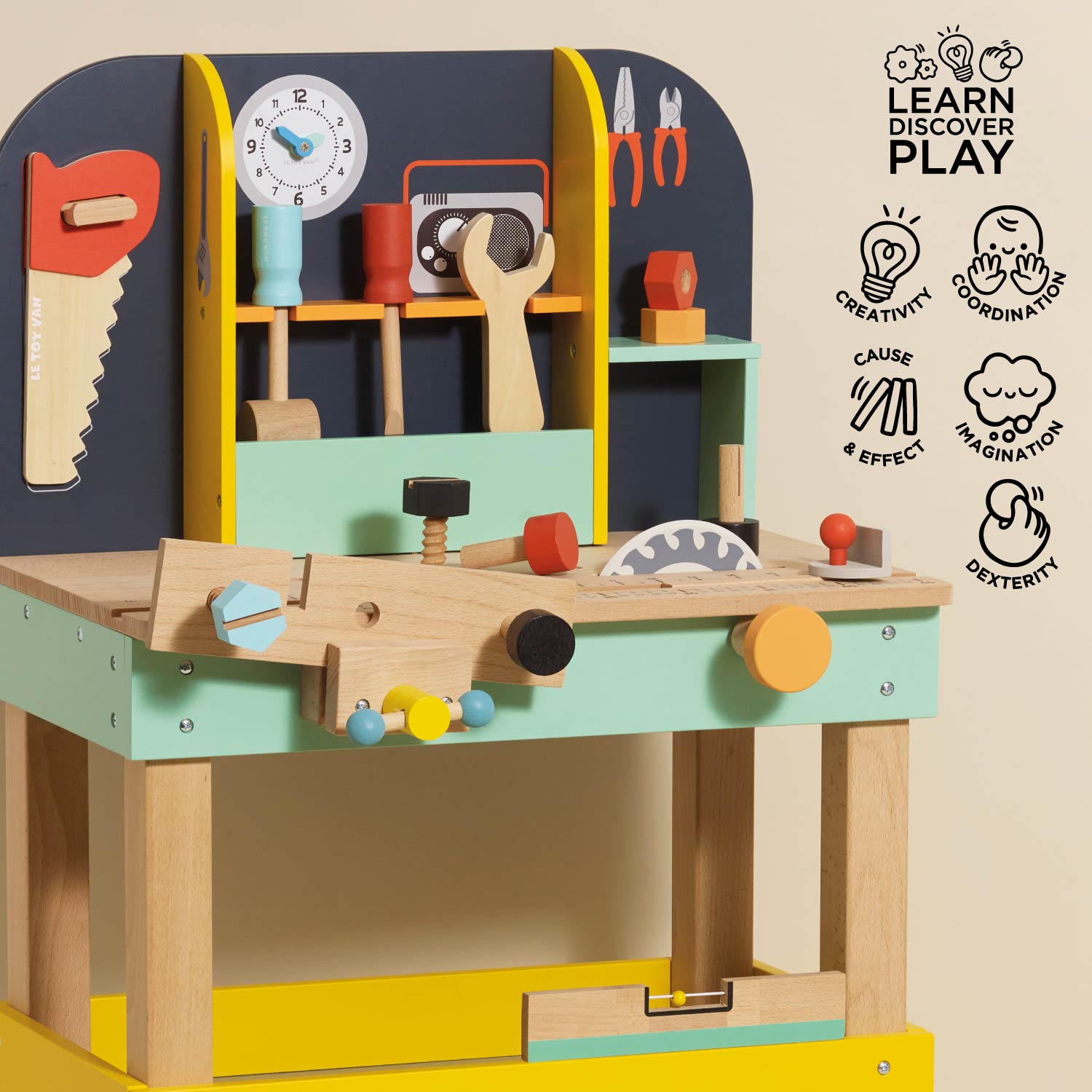
Imagine giving your child a space where creativity meets learning—a place designed just for their curious hands and bright minds. Your child’s workbench and tools are more than just toys; they’re gateways to developing skills, boosting confidence, and sparking endless imagination.
If you want to see your little one build, explore, and grow while having fun, this guide is for you. Keep reading to discover how the right workbench and tools can transform playtime into a powerful learning adventure.
Choosing The Right Workbench
Picking the right workbench for a child can help them enjoy building and crafting. It needs to fit their size and the space where it will be used.
Safety and comfort are key when choosing a workbench and tools for kids. This guide covers important points to consider.
Size And Height Considerations
The workbench should match the child's height to prevent strain. A bench too tall or too short can cause discomfort during use.
- Choose a height where the child can reach the surface easily.
- Allow room for the child to sit or stand while working.
- Consider adjustable benches for growing children.
Material And Durability
Durable materials help the workbench last longer and stay safe. Look for surfaces that can handle tools and minor damage.
| Material | Advantages | Considerations |
| Wood | Sturdy, natural look | May need sealing to avoid splinters |
| Plastic | Lightweight, easy to clean | Less durable under heavy use |
| Metal | Very durable, stable | Can be heavy, may have sharp edges |
Portability Features
Portable workbenches are easy to move and store. This helps if space is limited or you want to use the bench in different places.
- Lightweight design for easy carrying
- Foldable legs or parts for compact storage
- Built-in handles or wheels for moving the bench
Must-have Tools for Kids
Introducing kids to tools helps them learn new skills and build confidence. Choosing the right tools keeps their projects safe and fun.
Kids need tools made for their size and abilities. These tools encourage creativity and practical learning.
Safe Hand Tools
Safe hand tools are designed for small hands. They have smooth edges and easy grips to prevent injuries.
Examples include kid-sized hammers, screwdrivers, and pliers. These tools help children practice basic building skills.
- Plastic or rubber handles for better grip
- Rounded edges to avoid cuts
- Lightweight and easy to hold
- Simple designs without sharp tips
Measuring And Marking Tools
Measuring and marking tools teach kids how to plan their work. They learn to measure lengths and mark points accurately.
Common tools include rulers, tape measures, and pencils. These tools help kids follow instructions and improve precision.
- Plastic rulers with clear numbers
- Flexible tape measures for easy use
- Non-toxic pencils for marking wood or paper
- Chalk or washable markers for temporary marks
Basic Power Tools for Beginners
Basic power tools for kids are smaller and safer versions. They introduce children to powered tools with supervision.
Examples include cordless mini drills and battery-powered screwdrivers. These tools help kids learn to use power tools carefully.
- Battery-powered drills with low speed
- Tools with safety switches
- Lightweight and easy to handle
- Tools requiring adult supervision
Organizing The Workspace
A child’s workbench should be neat and easy to use. A well-organized space helps kids find tools quickly.
Keeping the area tidy also makes work safer and more fun for children.
Tool Storage Solutions
Store tools where kids can reach them safely. Use containers, hooks, or small shelves for each item.
Labeling each storage spot helps children return tools after use. This keeps the area clean and ready.
- Small bins for nails, screws, and bolts
- Magnetic strips for metal tools like screwdrivers
- Hooks or pegboards for hammers and wrenches
- Clear containers for easy visibility
Work Surface Setup
The work surface should be flat and sturdy. Make sure it is at the right height for the child.
Place a soft mat or rubber pad on the surface to protect it and keep tools from slipping.
- Clear area of unnecessary items
- Keep a small container for scrap pieces
- Use a ruler or measuring tape nearby
- Provide good lighting over the surface
Safety And Cleanliness
Safety is very important in a child’s workspace. Keep sharp tools out of reach and use safety gear.
Clean the space after each use. This prevents accidents and keeps the workbench ready for next time.
- Store sharp tools locked or high up
- Use safety goggles and gloves
- Clean up sawdust and debris regularly
- Keep a first aid kit nearby

Credit: www.amazon.ca
Encouraging Creativity Through Projects
Children learn best when they create and explore. Projects with tools help them build ideas and skills. These activities bring fun and learning together.
Using a child’s workbench and tools lets kids try new things. They can make simple items that boost their confidence and creativity.
Simple Starter Projects
Start with easy projects that use basic tools. Simple tasks help children understand how to use their workbench. They feel proud when they finish something on their own.
- Build a small birdhouse
- Create a wooden picture frame
- Make a simple toolbox
- Craft a pencil holder
Incorporating Learning and Fun
Projects should teach while keeping play in mind. Kids learn about shapes, sizes, and measuring. They also practice patience and focus.
| Project | Learning Focus | Fun Element |
| Birdhouse | Measuring and hammering | Watching birds visit |
| Picture Frame | Cutting and painting | Decorating with colors |
| Toolbox | Assembly and planning | Storing tools neatly |
| Pencil Holder | Design and balance | Personalizing with stickers |
Building Confidence And Skills
Each project helps children feel capable. They gain hand-eye coordination and problem-solving skills. Praise and encouragement boost their self-esteem.
Tips to Support Your Child:
- Give clear instructions
- Let them try before helping
- Celebrate small successes
- Encourage asking questions
Safety Tips For Young Builders
Building and creating with tools is fun for children. It helps them learn new skills and solve problems.
Safety is very important when kids use a workbench and tools. These tips will keep young builders safe.
Proper Tool Handling
Children should learn how to hold and use tools correctly. This prevents accidents and injuries.
Tools must be used carefully and only for their intended purpose. Teach kids to keep tools clean and store them safely.
- Hold tools firmly but not too tight
- Use the right tool for each job
- Keep sharp tools away from the body
- Put tools down when not in use
Protective Gear Essentials
Wearing protective gear helps prevent injuries. Kids should always wear safety glasses and gloves when needed.
Closed-toe shoes protect feet from falling objects. Hearing protection is important if tools make loud noises.
- Safety glasses to protect eyes
- Gloves to protect hands
- Closed-toe shoes for foot safety
- Hearing protection for noisy tools
Supervision And Guidance
Adults should always watch children when they use tools. Supervision helps prevent mistakes and injuries.
Explain each step clearly. Show kids how to use tools before they try on their own.
- Stay close while children work
- Give clear instructions
- Help with difficult tasks
- Encourage asking questions

Credit: www.amazon.ca

Credit: letoyvan.com
Frequently Asked Questions
What Is a Child’s Workbench?
A child’s workbench is a small, safe tool station designed for kids. It encourages creativity, motor skills, and learning through play. It often includes child-friendly tools like hammers, screwdrivers, and wrenches, promoting hands-on experience and imaginative projects in a controlled environment.
Which Tools Are Safe for Children’s Workbenches?
Safe tools include plastic or wooden hammers, screwdrivers with rounded edges, and non-toxic paintbrushes. Avoid sharp or heavy tools. Child-specific tools are designed to reduce injury risks while teaching basic tool use and coordination skills through play.
How Does a Child’s Workbench Benefit Development?
A child’s workbench improves fine motor skills, hand-eye coordination, and problem-solving abilities. It fosters creativity and patience while teaching basic tool handling. Engaging with tools boosts confidence and encourages STEM learning in a fun, interactive way.
What Age Is Suitable for a Child’s Workbench?
Most child’s workbenches suit ages 3 to 8 years. Younger children benefit from simple, safe tools, while older kids can handle more complex activities. Always supervise to ensure safety and adapt the workbench to the child’s skill level for the best experience.
Conclusion
A child’s workbench and tools help build skills and creativity. Kids learn by doing and exploring with their hands. These tools teach focus, patience, and problem-solving. Playing safely with the right tools boosts confidence. Simple projects bring fun and a sense of pride.
Every child benefit from hands-on learning experiences. A workbench becomes more than just a toy. It grows a child’s mind and imagination every day. Encourage safe play and watch them enjoy learning. This is a great step toward lifelong skills.

