
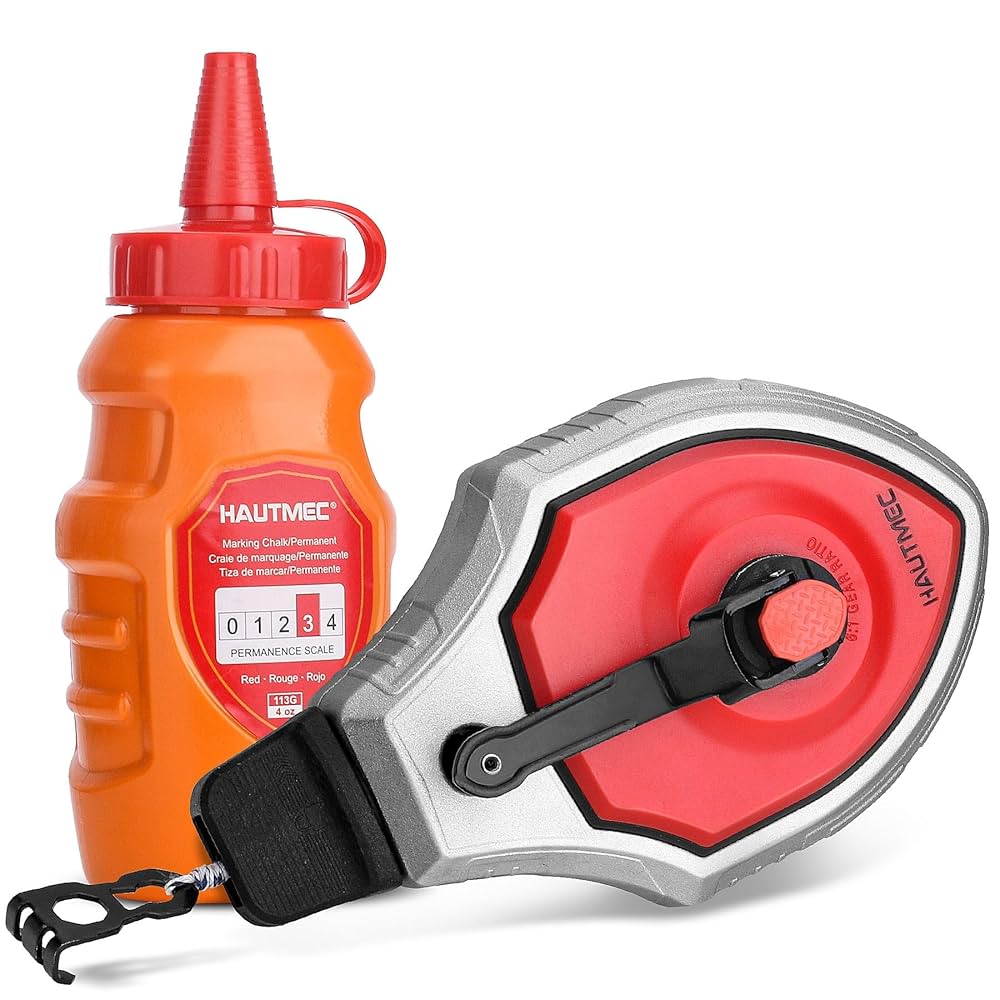
Have you ever struggled to mark a straight line quickly and accurately? Whether you're working on a DIY project, painting a wall, or laying tiles, a chalk line can be your best friend.
This simple tool helps you create perfect, crisp lines in seconds, saving you time and frustration. You’ll discover how a chalk line works, why it’s essential for your toolkit, and tips to use it like a pro. Keep reading—you’re about to make your next project easier and more precise than ever before.

Credit: www.amazon.com
Choosing The Right Chalk Line
Chalk lines help you mark straight lines on surfaces. Picking the right chalk line makes your work easier and more accurate.
Different chalk lines suit different jobs. Consider the type, color, and build before you buy.
Types Of Chalk Lines
There are several chalk line types. Each type fits different tasks and user needs.
- Manual Chalk Lines: Simple and affordable. You pull the string and snap it to mark.
- Automatic Chalk Lines: Have a reel that rewinds the string. Good for quick use.
- Laser Chalk Lines: Use a laser for precise straight lines. Ideal for high-accuracy jobs.
Best Chalk Colors For Visibility
Chalk color is important for seeing your marks clearly. Choose colors that stand out on your work surface.
- White Chalk: Works well on dark surfaces like wood or concrete.
- Red Chalk: Shows up on light surfaces like drywall or light wood.
- Blue Chalk: Visible on most surfaces and resists weather well.
- Green Chalk: Good for outdoor use and on light-colored materials.
Material And Build Quality
Strong materials make chalk lines last longer. Look for cases that protect the string and chalk inside.
Check the string quality. Thick and tight strings snap clean lines. The reel should turn smoothly without jamming.
Preparing Your Workspace
Before using a chalk line, you need to get your workspace ready. This makes your work easier and more accurate.
Organizing your area helps you draw straight and clean lines without mistakes or mess.
Cleaning And Measuring Surfaces
Make sure the surface is clean and dry before marking it. Dust or dirt can make the chalk line skip or smudge.
Use a tape measure to find the exact points where you want to snap the chalk line. Accurate measuring is key to a straight line.
- Wipe the surface with a dry cloth
- Remove any loose debris or dust
- Measure twice to confirm distances
- Mark spots lightly for reference
Marking Reference Points
Place small marks at the start and end points of your line. These marks guide where to hold the chalk line tight.
Use a pencil or light marker so your points are clear but easy to erase later.
- Mark the line’s start point clearly
- Mark the end point directly across
- Double-check alignment with a level or square
- Keep marks small and neat
Securing The Chalk Line
Hold the chalk line reel firmly at one reference point. Make sure it does not move while you stretch it to the other point.
Use nails, clamps, or helpers to keep the line tight and steady before snapping it.
- Hook or nail the chalk line at the first mark
- Pull the line tight toward the second mark
- Secure the line at the second point to prevent slack
- Check tension before snapping the line
Mastering Chalk Line Techniques
A chalk line helps create straight, clean lines on many surfaces. It is a simple tool but needs care and skill to use well. This guide shares key tips to improve your chalk line work.
Learn how to control string tension, snap accurately, and avoid common errors. These steps will help you get better results on every project.
Proper String Tension
Keeping the right string tension is important for a sharp chalk line. Too loose or too tight string can cause a poor mark.
- Pull the string tight enough to make it straight without bending.
- Hold the string firmly at both ends before snapping.
- Check for slack and adjust as needed before use.
- Replace worn or stretched string to maintain accuracy.
Accurate Snapping Methods
Snapping the chalk line properly creates a clear, straight mark. Use a steady hand and follow these tips for the best results.
| Tip | Description |
| Hold string close | Keep your hand near the center when snapping for control. |
| Snap once firmly | A single strong snap leaves a sharp line. |
| Check chalk coverage | Reload chalk if the line appears faint or uneven. |
| Practice on scrap | Test your snap on scrap material before marking the workpiece. |
Avoiding Common Mistakes
Many users face the same problems with chalk lines. Avoid these mistakes to improve your work.
- Do not let the string sag; it causes curved lines.
- Avoid snapping multiple times on the same spot; it smudges the line.
- Keep chalk dry and clean to prevent clumping.
- Store your chalk line tool properly to avoid damage.

Credit: www.ebay.com
Maintaining Your Chalk Line
Keeping your chalk line in good shape helps you get accurate lines every time. Simple care can extend its life and improve its performance.
Learn how to refill the chalk, store it properly, and fix common problems. These tips save time and avoid frustration on your projects.
Refilling And Changing Chalk
Refilling chalk is easy and keeps your line sharp. Always use the right chalk color for your work surface. Changing chalk colors helps with visibility on different materials.
- Open the chalk container carefully to avoid spills.
- Pour chalk powder slowly to fill the reservoir.
- Shake the line gently to distribute chalk evenly.
- Replace the chalk bag or reservoir if it is worn out.
- Use fine chalk powder for smooth lines and less clumping.
Storing For Longevity
Proper storage protects your chalk line from damage and moisture. Keep it dry and away from extreme temperatures to avoid chalk clumping and tool rust.
| Storage Tip | Reason |
| Store in a sealed plastic bag | Keeps chalk dry and clean |
| Keep in a cool, dry place | Prevents chalk from clumping |
| Hang or place flat | Protects line from tangling or stretching |
| Clean before storing | Removes dirt and chalk dust |
Troubleshooting Issues
If your chalk line snaps or the chalk does not mark well, follow these tips to fix it. Regular checks prevent bigger problems during work.
- Chalk doesn’t stick: Add more chalk powder and shake line well.
- Line snaps: Check for frayed string and replace it if needed.
- Uneven chalk marks: Refill chalk and pull line tight before snapping.
- Chalk bag clogged: Clean the chalk bag or replace it to improve flow.
Creative Uses For Chalk Lines
Chalk lines are simple tools that help you mark straight lines on many surfaces. They are useful for many projects around the house or garden.
Using chalk lines can save time and improve accuracy in your work. Here are some creative ways to use them.
Aligning Tiles And Flooring
Chalk lines help you place tiles in a straight line. They keep your floor or wall tiles neat and even.
Marking the center of the room with a chalk line helps balance the tile layout. It stops tiles from looking crooked or uneven.
- Snap chalk lines to find the room center
- Use lines to guide each tile row
- Check spacing between tiles with chalk marks
Framing And Carpentry
Chalk lines make it easier to build frames and wood structures. They give a clear guide to cut or nail wood straight.
Use chalk lines to mark stud positions on walls or to outline where beams will go. This helps keep your work precise.
- Mark stud locations quickly and clearly
- Outline cutting lines on large wood pieces
- Check level and alignment of beams
Gardening And Landscaping
Chalk lines help you create straight garden beds or pathways. They make planting rows neat and organized.
You can snap chalk lines to mark where to plant seeds or lay stones. This keeps your garden tidy and easy to maintain.
- Mark straight rows for planting seeds
- Outline garden bed shapes
- Set paths or walkways with clear lines

Credit: www.amazon.com
Frequently Asked Questions
What Is A Chalk Line Used For In Construction?
A chalk line marks straight lines on surfaces for accurate cutting or alignment. It helps ensure precision in building projects.
How Do You Use A Chalk Line Correctly?
Pull out the string, snap it on the surface, and release. This leaves a straight chalk mark for guidance.
What Types Of Chalk Are Best For Chalk Lines?
Choose chalk based on surface and weather. Common types include white, blue, red, and black chalk for visibility.
How Long Does Chalk Line Powder Last?
Chalk powder typically lasts several months if kept dry. Exposure to moisture reduces its effectiveness quickly.
Conclusion
Chalk lines help create straight and clear guide marks. They save time and reduce errors in many projects. Using a chalk line is simple and effective for drawing long lines. Anyone working with wood, walls, or floors can benefit. Keep your chalk line ready for your next task.
It makes your work neater and easier to follow. A small tool with big help. Try it yourself and see the difference.