

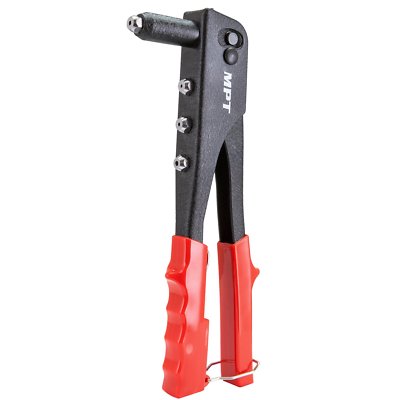
Have you ever wondered how strong and lasting connections are made in places you can’t even see? That’s where a blind riveter comes in.
Whether you’re working on a DIY project, fixing your car, or handling metalwork, this tool can make your job easier and more reliable. Imagine joining two pieces tightly without needing full access to both sides—that’s the power of a blind riveter.
Keep reading, and you’ll discover how this simple yet powerful tool can transform your work and save you time and effort.

Credit: www.amazon.ca
What Is A Blind Riveter
A blind riveter is a tool used to fasten materials together. It helps join parts where only one side is accessible.
This tool is common in metalwork and construction. It makes strong, permanent joints quickly and easily.
How A Blind Riveter Works
The blind riveter pulls a mandrel through a rivet. This action expands the rivet, securing the materials tightly.
Once the rivet is set, the mandrel breaks off. The rivet stays in place, holding parts firmly together.
Where Blind Riveters Are Used
Blind riveters work well when you cannot reach both sides of a joint. They are great for tight spaces.
- Automotive repairs and assembly
- Aircraft manufacturing
- Building metal structures
- Fixing gutters and roofs
There are many kinds of blind rivets. Each type suits different materials and strength needs.
- Standard rivets for light work
- Heavy-duty rivets for thick materials
- Sealed rivets to prevent leaks
- Special rivets for plastics or soft metals

Credit: www.ebay.ca
Types Of Blind Rivets
Blind rivets are essential in construction and manufacturing. They join materials like metal, plastic, and wood.
These rivets are called "blind" because they can be installed from one side. This makes them useful when access to the opposite side is limited.
Standard Blind Rivets
Standard blind rivets are the most common type. They are suitable for many general applications.
- Used in light-duty fastening
- Available in various materials like aluminum and steel
- Easy to install with a rivet gun
Structural Blind Rivets
Structural blind rivets provide higher strength. They are used in heavy-duty applications.
| Material | Application |
| Steel | Automotive |
| Stainless Steel | Construction |
| Aluminum | Aerospace |
Multi-grip Blind Rivets
Multi-grip blind rivets adapt to different material thicknesses. They reduce inventory needs.
Sealed Blind Rivets
Sealed blind rivets prevent leakage and contamination. They are ideal for watertight assemblies.
- Used in marine applications
- Prevent moisture entry
- Ensure airtight seals
Choosing The Right Rivet
Picking the right blind rivet is key for strong and lasting joints. Rivets come in different materials and sizes. You must select one that fits the parts you want to join.
Think about the materials, the thickness of what you are fastening, and the forces the rivet must handle. These factors help you choose the best rivet for your project.
Material Compatibility
Rivets and the materials you join should be compatible. Using different metals can cause rust or weaken the joint. Choose rivet materials that match or suit the parts.
- Aluminum rivets work well with aluminum parts
- Steel rivets fit steel or iron pieces
- Stainless steel rivets resist rust on outdoor or wet parts
- Copper or brass rivets suit decorative or electrical uses
Grip Range Considerations
The grip range is how thick the materials can be for one rivet size. If the rivet is too short, it won’t hold well. If it’s too long, it may not form a tight joint.
| Rivet Size | Minimum Grip (mm) | Maximum Grip (mm) |
| 3.2 mm Diameter | 1.0 | 4.0 |
| 4.0 mm Diameter | 1.5 | 6.0 |
| 4.8 mm Diameter | 2.0 | 8.0 |
Shear And Tensile Strength
Shear strength is how much force the rivet can take from side to side. Tensile strength is how much force it can take when pulled apart. Choose rivets that meet these strength needs.
- Check the rivet’s strength ratings before use
- Use steel rivets for heavy loads
- Aluminum rivets fit lighter jobs
- Stainless steel offers good strength and rust resistance

Credit: www.amazon.ca
Blind Riveter Tools
Blind riveters are tools used to fasten materials where access is limited to one side. They are essential for creating strong joints in metal, plastic, and other materials. Different types of blind riveters fit various needs and environments.
Choosing the right blind riveter tool depends on factors like the size of the rivet, the power source, and the work environment. Below are common types of blind riveters and their features.
Manual Riveters
Manual riveters are hand-operated tools. They work by squeezing handles together to pull the rivet mandrel and set the rivet. These tools are lightweight and easy to carry.
- Best for small jobs and low volume
- Require physical effort to use
- Affordable and simple design
- Portable for use in tight spaces
Pneumatic Riveters
Pneumatic riveters use compressed air to drive the rivet. They are faster and require less effort than manual riveters. These tools are common in industrial settings.
| Feature | Description |
| Power Source | Compressed air |
| Speed | High speed for quick rivet setting |
| User Effort | Low, air pressure does the work |
| Best Use | Medium to high volume tasks |
Electric Riveters
Electric riveters run on battery or corded power. They combine good speed with portability. These riveters work well for jobs without easy access to air compressors.
- Battery powered for cordless use
- Consistent power for uniform rivets
- Good for medium volume work
- Easy to handle in various positions
Hydraulic Riveters
Hydraulic riveters use fluid pressure to set rivets. They offer strong force and are used for heavy-duty applications. These tools reduce operator fatigue and increase efficiency.
| Hydraulic Riveter Features | Description |
|---|---|
| Power Source | Hydraulic fluid pressure |
| Force | High, suitable for large rivets |
| Usage | Heavy industrial and construction work |
| Operator Fatigue | Low due to hydraulic assistance |
Step-by-step Riveting Process
Blind riveting joins two materials without needing access to both sides. It uses a special fastener called a blind rivet. This process is common in metalwork and construction.
Each step in the riveting process ensures a strong and secure joint. Follow the steps carefully for best results.
Preparing The Materials
First, gather the materials you want to join. Make sure the surfaces are clean and free of dirt or oil. This helps the rivet hold better.
Check the thickness of the materials to choose the correct rivet size. Drill holes through both materials where you want the rivet.
- Clean surfaces
- Measure material thickness
- Drill matching holes
- Select correct rivet size
Inserting The Rivet
Place the rivet through the holes in the materials. The rivet’s long pin, called the mandrel, should stick out on the side where you will use the tool.
Make sure the rivet head sits flat against the material surface. This helps create a tight joint when you pull the mandrel.
Operating The Riveter
Use the blind riveter tool to pull the mandrel. Squeeze the handles or trigger to start the process. The tool pulls the mandrel inside the rivet body.
This action expands the rivet body inside the materials. It locks the pieces together tightly. Keep squeezing until the mandrel breaks off.
- Insert mandrel into tool
- Squeeze handles or trigger
- Wait for mandrel to snap
- Release and remove tool
Inspecting The Joint
Check the rivet head on the front side. It should be flush and hold the material firmly. Look for any gaps or loose areas.
On the back side, the rivet body should be expanded and tight. If the joint feels weak, remove the rivet and try again.
- Rivet head sits flat
- No gaps between materials
- Expanded rivet body on back
- Joint feels secure and tight
Common Applications
Blind riveters are tools used to fasten materials without access to both sides. They work by pulling a rivet through one side, creating a strong hold. These tools are popular in many industries due to their ease of use and reliability.
Below are some common places where blind riveters are used. Each application benefits from the fast and secure fastening these tools provide.
Automotive Industry
In the automotive industry, blind riveters join parts of car bodies and interiors. They help attach panels, trims, and other components quickly. This speeds up production and keeps vehicles strong and safe.
Blind rivets are useful because they can reach tight spots where screws or bolts cannot. They also reduce the risk of damage to delicate car parts.
Aerospace Assembly
Aerospace workers use blind riveters to build aircraft parts. These fasteners hold metal sheets and structural elements firmly. The tools allow assembly without needing to access the back side of the material.
Blind rivets help keep planes light while maintaining strength. They are also reliable under high pressure and vibration during flight.
Construction Projects
Blind riveters are common in construction for joining metal frames and panels. Builders use them to attach siding, roofing, and ductwork. These fasteners save time and improve the structure's durability.
Their ability to fasten materials from one side makes them ideal for hard-to-reach places on construction sites.
Diy And Home Repairs
DIY enthusiasts use blind riveters for home projects like fixing gutters or assembling furniture. They are easy to handle and do not require special skills. This makes them perfect for quick repairs around the house.
- Attaching metal sheets or panels
- Fixing broken appliances
- Building or repairing furniture
- Securing plastic or wood parts
Troubleshooting Riveting Issues
Blind riveting is a quick way to join materials without access to both sides. Sometimes, issues happen during the process. These problems can weaken the joint or damage the rivet.
Knowing how to spot and fix common problems helps keep your work strong and safe. Here are some common issues and tips to solve them.
Rivet Pulling Problems
Rivet pulling problems occur when the rivet does not set correctly. This can happen if the tool slips or the rivet is the wrong size.
Check that the rivet fits the hole tightly. Make sure the pulling tool is clean and working well. Use steady force to pull the rivet.
- Use the right rivet size for the materials
- Inspect the tool for damage or dirt
- Apply steady, even pressure during pulling
- Replace worn or broken rivets immediately
Misaligned Joints
Misaligned joints happen when the holes do not line up well. This causes the rivet to pull the parts unevenly.
Measure and mark holes carefully before drilling. Use clamps to hold materials in place. Check alignment before inserting the rivet.
- Mark holes clearly on both parts
- Clamp parts securely to avoid movement
- Double-check hole alignment before riveting
- Re-drill holes if needed for better fit
Rivet Head Deformation
Rivet head deformation occurs if too much force is used or the rivet is weak. The head may flatten or crack, causing a weak joint.
Use a rivet with the correct strength for your materials. Apply just enough force to form the rivet head without crushing it.
- Choose rivets made for your material type
- Use the proper tool setting for force
- Stop pulling when the rivet head forms properly
- Discard rivets with damaged heads
Maintenance And Safety Tips
Blind riveters are useful tools for joining materials. Keeping them in good shape is important. Using them safely protects you from injury.
This guide gives simple tips on caring for your blind riveter and using it safely.
Tool Care And Storage
Clean the blind riveter after each use. Remove dust and metal pieces. Check for worn parts to replace.
Store the tool in a dry place. Keep it in a case or toolbox to avoid damage.
- Wipe the tool with a clean cloth
- Apply light oil to moving parts
- Keep rivet jaws clean and free of debris
- Store away from moisture and dirt
Protective Gear Recommendations
Wear safety glasses to protect your eyes from flying pieces. Use gloves to protect your hands from sharp edges.
Wear ear protection if you work in noisy areas. Choose comfortable clothes that do not catch in the tool.
- Safety glasses or goggles
- Work gloves with good grip
- Hearing protection if needed
- Close-fitting clothing
Safe Operating Practices
Hold the blind riveter firmly with both hands. Keep fingers away from the rivet area. Use steady pressure when squeezing the handles.
Check the rivet size matches the tool. Do not force the tool if it jams. Stop and clear the jam carefully.
- Use the correct rivet size
- Keep hands clear of the rivet path
- Apply smooth, even pressure
- Stop if the tool jams
- Inspect the tool before use
Frequently Asked Questions
What Is A Blind Riveter Used For?
A blind riveter installs rivets where access is only from one side. It’s ideal for tight or hard-to-reach spaces. This tool is common in automotive, aerospace, and construction industries for secure fastening without needing backside access.
How Does A Blind Riveter Work?
A blind riveter pulls the rivet mandrel through the rivet body. This action expands the rivet, clamping materials together. The mandrel then snaps off, leaving a strong, permanent joint visible from only one side.
What Materials Can Blind Rivets Join?
Blind rivets can join metals, plastics, and composites. They work well with aluminum, steel, and stainless steel sheets. Their versatility makes them suitable for various industries requiring durable, quick, and reliable fastening.
What Are The Advantages Of Using A Blind Riveter?
Blind riveters are easy to use and require access from one side only. They provide strong, vibration-resistant joints quickly. They reduce labor time and are ideal for assembly lines and repair work where backside access is limited.
Conclusion
A blind riveter helps join materials where you cannot see the back. It saves time and effort in tight spaces. Many industries use it for quick, strong fixes. Choosing the right riveter and rivets matters a lot. Proper use ensures safe and lasting results.
This tool makes work simpler and faster every day. Try it yourself to see how it works well.

