

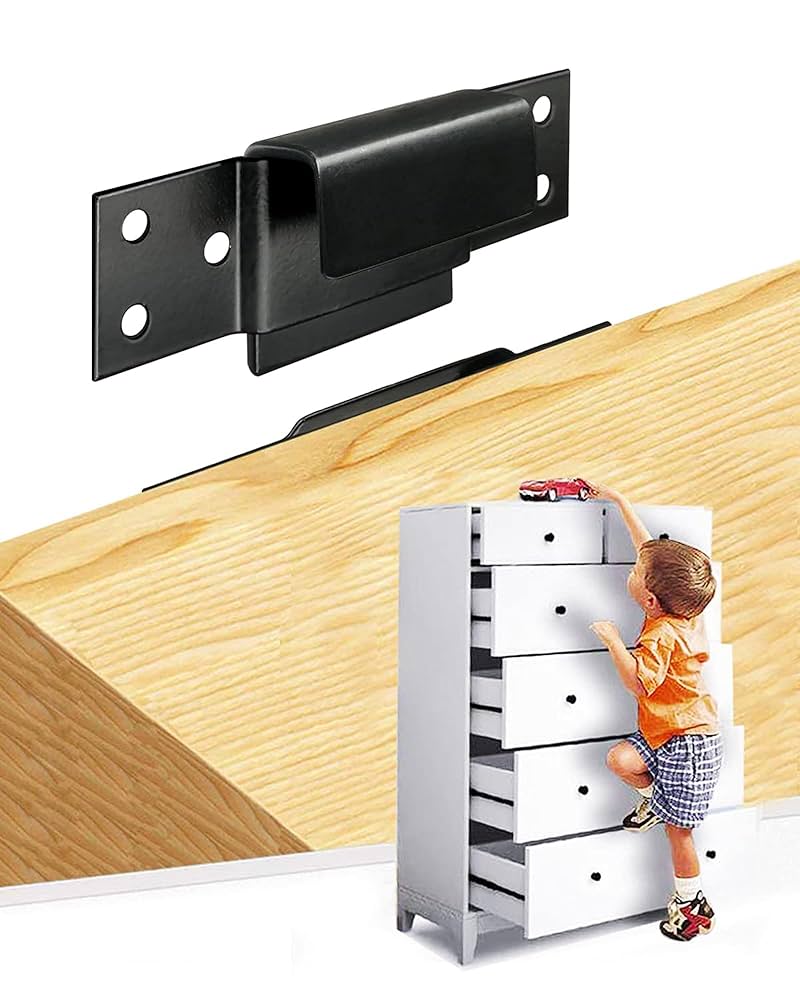
If you have a dresser in your home, you know how important it is to keep it stable and secure. But did you realize that without the right support, your dresser could tip over and cause serious accidents?
That’s where a dresser wall anchor comes in. It’s a simple tool that can protect your family and give you peace of mind. You’ll discover why a dresser wall anchor is a must-have, how it works, and the easy steps to install one yourself.
Keep reading to make your home safer today.

Credit: www.amazon.com
Why Wall Anchors Matter
Dressers can be heavy and unstable if not attached to walls. Wall anchors keep furniture steady and safe.
Using wall anchors helps prevent accidents that can cause injuries or damage. It is a simple safety step everyone should take.
Risks Of Unsecured Dressers
Dressers that are not fixed to walls can tip over easily. This risk is higher in homes with children or pets.
- Dressers may fall during earthquakes or strong vibrations.
- Children climbing drawers can cause the dresser to tip.
- Heavy items inside drawers shift weight and increase tipping risk.
- Unstable dressers can hurt people or damage floors and walls.
Common Accident Scenarios
Many accidents happen because dressers are not anchored properly. Understanding these scenarios helps prevent injuries.
| Scenario | Description | Outcome |
| Child Climbing | A child climbs open drawers | Dresser tips, child gets hurt |
| Earthquake | Strong shaking moves furniture | Dresser falls, damages room |
| Pet Jumping | Pet jumps on unstable dresser | Dresser tips, pet injured |
| Heavy Drawer Pull | Pulling heavy drawer causes imbalance | Dresser falls forward |

Credit: www.amazon.com
Types Of Wall Anchors
Wall anchors keep dressers safe and secure. They prevent tipping accidents. Different types suit different walls.
Choose the right anchor for your wall type. It ensures safety and stability.
Toggle Bolts
Toggle bolts are strong. They hold heavy items securely. Use them for drywall or plaster.
- Requires a drilled hole
- Expands behind the wall
- Supports heavy loads
Molly Bolts
Molly bolts are easy to install. They expand inside the wall. Ideal for medium-weight loads.
- Works with drywall
- Needs a pilot hole
- Provides a secure hold
Plastic Anchors
Plastic anchors are simple. They are great for light items. Suitable for drywall and concrete.
- Easy to use
- Requires a drilled hole
- Not for heavy loads
Strap Kits
Strap kits secure furniture to walls. They are adjustable and easy to install. Ideal for homes with children.
- Includes straps and anchors
- Prevents tipping accidents
- Adjusts to fit different furniture
Choosing The Right Anchor
Using the right wall anchor keeps your dresser safe and stable. It prevents tipping accidents that can hurt people or damage furniture.
Choosing the correct anchor depends on your wall type, the dresser’s weight, and the furniture design. Each factor helps pick a strong and secure anchor.
Assessing Wall Material
Walls come in many materials like drywall, plaster, concrete, or brick. Different anchors work best with each type.
Drywall anchors are common but need to match the weight load. Masonry anchors fit better in brick or concrete walls.
- Use toggle bolts or molly bolts for drywall
- Use sleeve or expansion anchors for masonry
- Avoid anchors that do not fit your wall type
Weight And Size Considerations
Check the dresser’s weight and size before picking an anchor. Heavy dressers need stronger anchors to hold them safely.
Look for anchors with weight limits above your dresser’s weight. This ensures the anchor can support the load without failing.
- Weigh your dresser including contents
- Pick anchors rated for more than this weight
- Use multiple anchors for very heavy furniture
Compatibility With Furniture
Not all furniture has the same structure for anchoring. Some dressers have built-in anchor points, others do not.
Make sure the anchor fits the furniture design. You may need brackets or straps that attach securely to your dresser.
- Check if your dresser has anchor holes or brackets
- Choose anchors that connect firmly to dresser parts
- Use straps or brackets if no built-in anchor points exist
Step-by-step Installation
Installing a dresser wall anchor helps prevent accidents. It keeps your furniture safe and stable.
This guide shows how to install a wall anchor for your dresser. Follow each step carefully.
Gathering Tools And Materials
Before you start, gather all the needed tools and materials. This helps the process go smoothly.
- Wall anchors or brackets
- Screwdriver or drill
- Stud finder
- Measuring tape
- Level
- Pencil
- Screws (usually included with anchors)
Locating Studs
Studs are vertical wood beams inside your wall. Anchoring to studs keeps the dresser secure.
Use a stud finder to locate these beams behind the wall. Move it slowly until it beeps or lights up.
Marking And Drilling
Mark the stud locations with a pencil. Measure the height on the wall where the anchor will go.
Use this table to check drill sizes for common wall anchors:
| Anchor Type | Drill Bit Size |
|---|---|
| Plastic Expansion | 1/4 inch |
| Molly Bolt | 3/16 inch |
| Toggle Bolt | 1/2 inch |
Drill pilot holes at the marked points. Use a drill bit that fits your anchor size.
Securing The Anchor
Insert the wall anchor into the drilled hole. Tap it gently with a hammer if needed to fit flush.
Use screws to secure the anchor tightly to the wall. Do not overtighten to avoid damage.
Attaching The Dresser
Attach the dresser bracket or strap to the back of your dresser. Use the screws provided.
Lift the dresser close to the wall. Connect the dresser’s bracket to the wall anchor securely.
Maintenance And Inspection
Keeping dresser wall anchors in good condition is important for safety. Regular maintenance helps prevent accidents caused by falling furniture.
Inspection allows you to spot problems early. This guide covers key checks and signs to watch for.
Regular Safety Checks
Check your dresser wall anchors every few months. Look for loose screws or shifted anchors. Make sure the dresser stays firmly against the wall.
- Ensure anchors are tight and secure
- Confirm the wall and dresser surfaces are dry and clean
- Test the dresser by gently pulling it away from the wall
- Check for any movement or looseness in the anchor points
Signs Of Wear And Damage
Look for cracks, rust, or bent parts on the anchors. Damaged anchors can fail and cause the dresser to fall.
| Sign | What It Means |
|---|---|
| Cracks in plastic or metal | Material is weakening and may break |
| Rust or corrosion | Anchors are losing strength |
| Bent or warped parts | Anchor may not hold properly |
| Loose screws or fittings | Anchor is not secure |
When To Replace Anchors
Replace anchors if you notice any damage or if they feel loose. Old anchors may not support the dresser well.
- Replace anchors immediately after signs of damage
- Use new anchors if you move the dresser to a different wall
- Change anchors every few years as a safety measure
- Follow the manufacturer’s instructions for replacement

Credit: www.amazon.com
Additional Safety Measures
Using dresser wall anchors helps keep furniture stable and safe. These extra steps protect your home from accidents.
It is important to use more safety measures along with wall anchors. These steps reduce risks, especially for children.
Positioning Furniture Safely
Place dressers and heavy furniture against walls. Avoid putting them near windows or doorways where they can fall.
Keep the heaviest items in the lowest drawers. This lowers the center of gravity and helps prevent tipping.
- Use wall anchors on all tall furniture
- Leave space around furniture for easy access
- Do not stack heavy objects on top
Childproofing Tips
Children can pull on dressers and cause accidents. Use safety locks on drawers to keep them closed.
Teach children not to climb on furniture. Supervise play areas to keep kids safe around heavy items.
- Install drawer locks or latches
- Use corner guards to prevent bumps
- Keep small objects out of reach
Using Anti-tip Straps With Other Furniture
Anti-tip straps work on many types of furniture, not just dressers. Use them on bookshelves, TVs, and cabinets.
Secure all tall furniture to the wall. This reduces the risk of tipping during earthquakes or if pulled.
- Choose straps made of strong materials
- Follow the manufacturer’s instructions carefully
- Check straps regularly for wear or damage
Frequently Asked Questions
What Is A Dresser Wall Anchor Used For?
A dresser wall anchor secures dressers to walls to prevent tipping. It enhances safety, especially in homes with children. Anchors stabilize furniture during earthquakes or accidental bumps. Installing one reduces injury risks and damage. It’s a simple, effective safety solution.
How Do You Install A Dresser Wall Anchor?
To install, locate wall studs first for secure anchoring. Attach one end of the anchor to the dresser, the other to the stud. Use screws and a drill for a tight fit. Follow manufacturer instructions carefully for best results. This ensures stability and safety.
Are Dresser Wall Anchors Necessary For All Dressers?
Wall anchors are highly recommended for tall or heavy dressers. They prevent tipping accidents and improve overall safety. Smaller, lightweight dressers may not always require anchors. However, it’s best to secure all furniture in homes with kids. Safety should always come first.
Can Dresser Wall Anchors Damage Walls?
Proper installation of wall anchors causes minimal wall damage. Anchors use small screws that leave tiny holes. These holes can be easily patched and painted over. Using anchors is safer than risking furniture tipping and causing bigger damage. Always use correct tools to minimize impact.
Conclusion
Using a dresser wall anchor keeps your furniture safe and steady. It prevents tipping and protects children from accidents. Installing anchors is simple and quick with basic tools. Choose the right anchor for your wall type. Secure your dresser to avoid damage and injuries.
Safety in your home starts with small steps like this. Keep your space organized and worry-free. Trust in wall anchors to provide extra support and peace of mind.

