

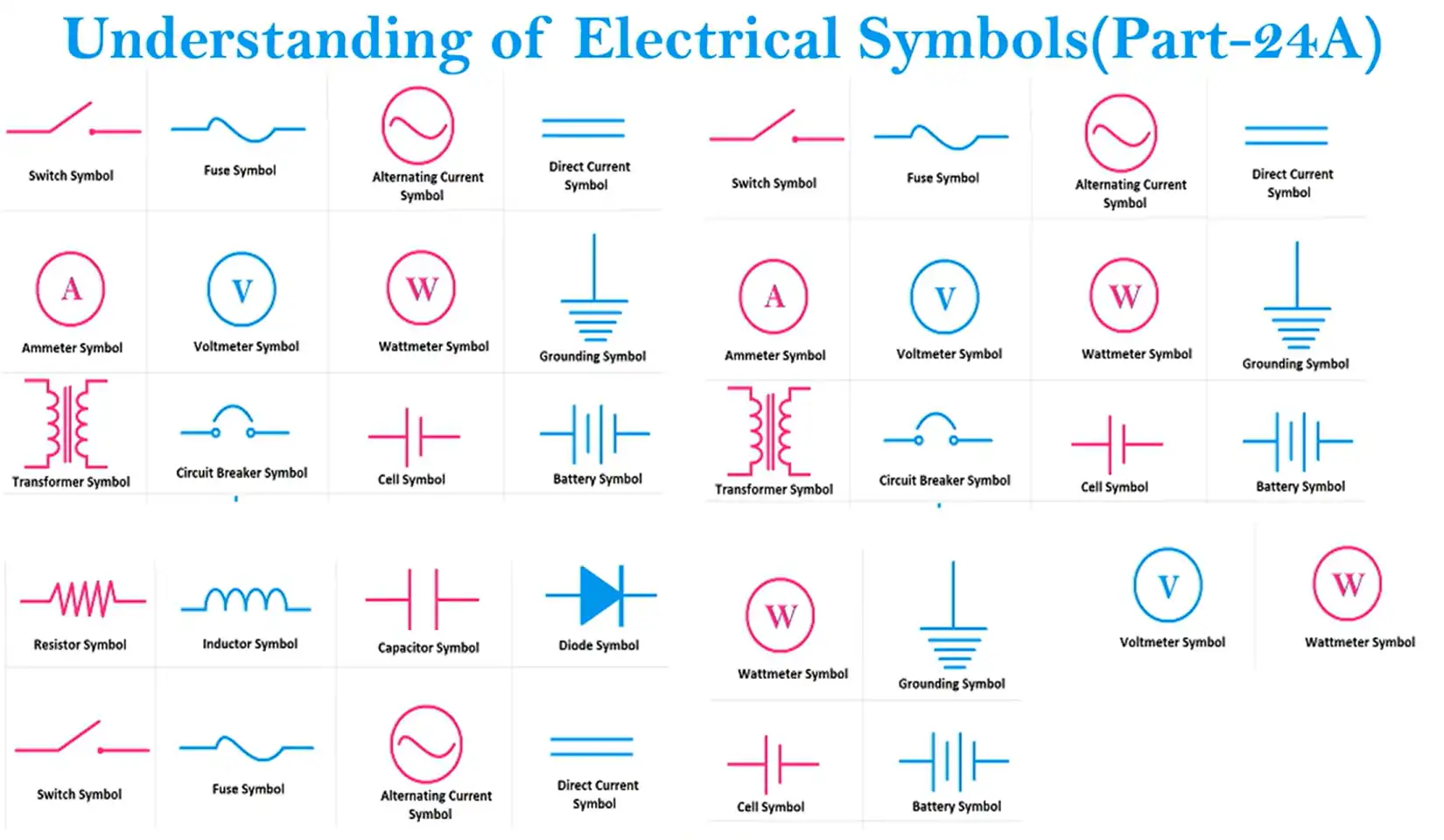
Are you puzzled by the tiny icons on your electrical panel? Among them, the circuit breaker symbol might seem insignificant, yet it plays a crucial role in safeguarding your home.
Understanding this symbol can empower you to handle electrical issues with confidence and ensure the safety of your living space. Imagine having the ability to quickly identify potential problems and prevent costly damage. By delving into the significance and function of the circuit breaker symbol, you'll gain insights that could protect both your property and your peace of mind.
Keep reading and discover how this small symbol can have a big impact on your everyday life.
Circuit Breaker Basics
Circuit breakers play a vital role in electrical systems. They protect wiring and devices from damage caused by excess current or short circuits. Understanding circuit breaker basics helps in identifying their symbols on electrical diagrams. This knowledge supports safe installation and maintenance of electrical setups.
Purpose In Electrical Systems
Circuit breakers stop electrical flow when problems occur. They prevent fires and equipment damage by cutting off power quickly. This action keeps users safe and reduces repair costs. Circuit breakers reset easily after tripping, unlike fuses that need replacement. They ensure continuous protection and system reliability.
Types Of Circuit Breakers
Different circuit breakers serve different needs. Common types include:
- Miniature Circuit Breakers (MCB): Used in homes and small offices for low current.
- Molded Case Circuit Breakers (MCCB): Designed for higher current in industrial settings.
- Ground Fault Circuit Interrupters (GFCI): Protect against electric shocks near water.
- Arc Fault Circuit Interrupters (AFCI): Detect dangerous electrical arcs in wiring.
Each type has a specific symbol to identify it on diagrams. Learning these symbols helps in reading and creating electrical plans.

Credit: www.shutterstock.com
Common Circuit Breaker Symbols
Circuit breaker symbols are essential in electrical diagrams. They help identify the type and function of the breaker quickly. Common symbols follow standard shapes and labeling rules. Understanding these symbols improves reading and designing circuits.
Standard Symbol Shapes
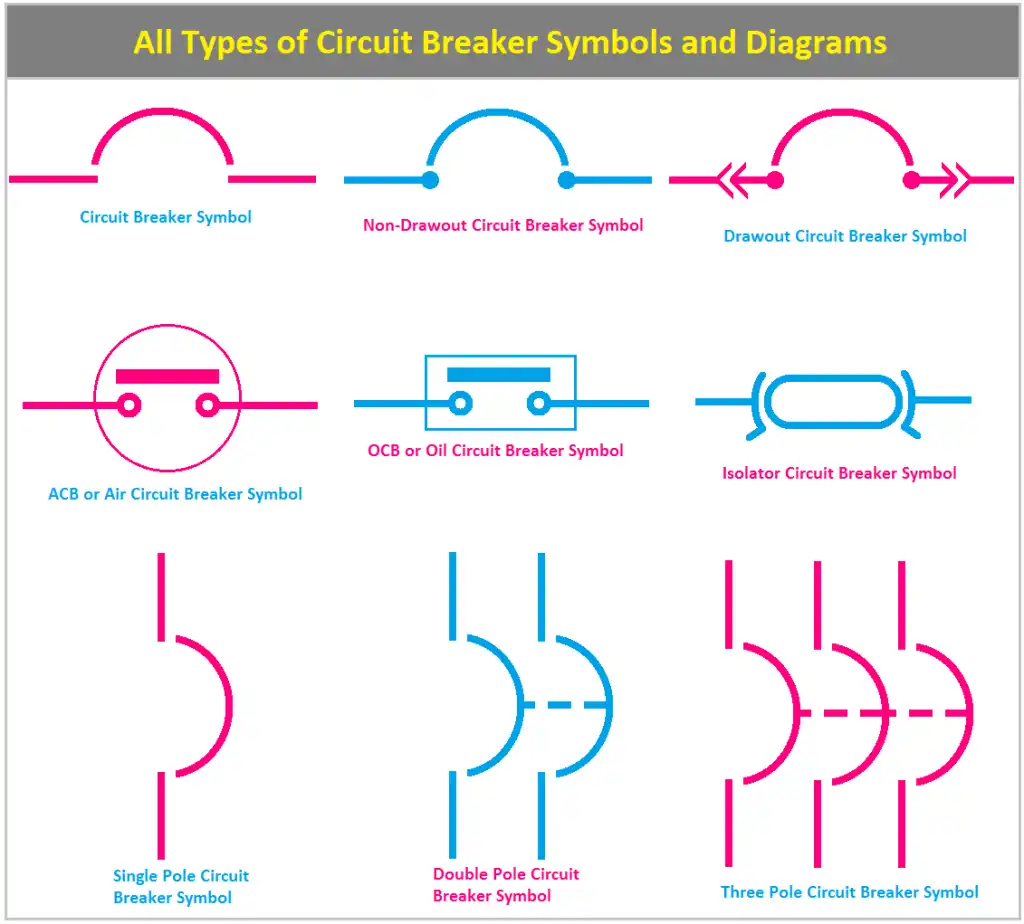
Most circuit breaker symbols use simple geometric shapes. The common shape is a rectangle or square. Inside the shape, a line or arc represents the breaking mechanism. Some symbols show two lines to indicate double-pole breakers. Other variations include a small circle or dot to show manual operation points. These shapes make it easier to spot breakers on a schematic.
Labeling And Notations
Labels add important information to circuit breaker symbols. They often include letters or numbers to show breaker type or rating. For example, "CB" stands for circuit breaker. Numbers may indicate the breaker’s current limit, like "20A" for 20 amps. Some symbols use letters to show special features like “G” for ground fault. Clear labeling helps electricians understand the circuit’s protection level at a glance.
Reading Electrical Diagrams
Reading electrical diagrams can feel like decoding a secret language. These diagrams are essential for understanding how electrical systems work, especially when troubleshooting or installing new circuits. Grasping the symbols and connections is key to working confidently and safely with electrical components.
Identifying Circuit Breakers
Circuit breakers are typically represented by a simple switch symbol, often a rectangle or a pair of parallel lines with a break in the middle. Sometimes, you’ll see a curved line or a small arc indicating the switch mechanism. Recognizing these symbols quickly helps you pinpoint where the circuit protection is located in the system.
Have you ever missed a circuit breaker symbol and spent hours tracing wires? I have, and it taught me to always double-check those small symbols before moving forward. Knowing what the symbol looks like saves time and prevents errors.
Interpreting Connections
Connections in electrical diagrams show how circuit breakers link with other components like switches, wires, and loads. Lines represent wires, and dots or nodes indicate where wires connect. Sometimes lines cross without dots, meaning no connection—this detail can be easy to overlook but is crucial.
Look closely at how the lines interact around the circuit breaker symbol. Are they feeding power into the breaker or leading out to devices? Understanding these paths helps you visualize the flow of electricity and ensures you’re reading the diagram correctly.
Symbol Variations By Region
Symbols for circuit breakers differ across regions. These differences arise from local standards and design preferences. Understanding regional symbol variations helps in reading electrical diagrams correctly. Engineers and technicians rely on these symbols for safe and efficient work. Let’s explore how symbols vary between major standards and regions.
IEC Vs Ansi Symbols
The International Electrotechnical Commission (IEC) and the American National Standards Institute (ANSI) use different symbols. IEC symbols are simple and use fewer lines. ANSI symbols are more detailed and show internal parts clearly.
- IEC symbols focus on function and are widely used worldwide.
- ANSI symbols provide more visual detail and are common in North America.
- IEC uses a rectangle with a diagonal line to represent a circuit breaker.
- ANSI depicts the breaker with a more complex shape showing contacts.
Knowing these differences helps when reading electrical drawings from different countries.
Regional Standards Impact
Regional rules affect circuit breaker symbols beyond IEC and ANSI. European countries mostly follow IEC standards. The United States and Canada prefer ANSI symbols. Asian countries vary but lean towards IEC due to international trade.
Some regions add unique marks to show specific breaker types or ratings. These marks help local technicians identify equipment quickly. Standards also influence symbols for special breakers like ground fault or high voltage types.
| Region | Common Standard | Symbol Style | Notes |
|---|---|---|---|
| Europe | IEC | Simple and functional | Widely adopted in industrial designs |
| North America | ANSI | Detailed and descriptive | Includes extra info on breaker parts |
| Asia | Mixed | IEC mainly, some ANSI | Varies by country and application |
Being aware of these regional impacts improves communication and safety in electrical projects.
Tips For Accurate Diagram Reading
Reading circuit diagrams accurately is essential for troubleshooting and building electrical systems. It’s easy to misinterpret symbols if you don’t approach the diagrams carefully. Applying a few practical tips can save you time and prevent costly mistakes.
Cross-referencing Symbols
Always compare the circuit breaker symbol with other symbols in the diagram. This helps you understand how the breaker fits within the entire circuit. Sometimes, similar symbols represent different components, so cross-checking prevents confusion.
Look for consistency across multiple diagrams if you have them. If one diagram labels a symbol differently, it might indicate a unique function or a specific type of breaker. Have you ever caught a mistake just by spotting a symbol that didn’t match others?
Using Legend and Keys
Legends and keys are your best friends when reading circuit diagrams. They explain every symbol, including variations of the circuit breaker symbol. Don’t skip reading them; they ensure you interpret each part correctly.
Sometimes, the same symbol might have slight changes depending on the manufacturer or standard used. The legend clarifies these differences. Always keep the legend close by, especially when you’re dealing with complex diagrams.
Credit: www.onesto-ep.com
Tools For Decoding Diagrams
Understanding circuit breaker symbols can feel like deciphering a foreign language at first. But with the right tools, you can break down complex diagrams into clear, manageable parts. Having access to effective aids not only speeds up your learning but also boosts your confidence when working with electrical schematics.
Software Aids
Software tools have transformed how you read and interpret circuit diagrams. Programs like AutoCAD Electrical or SmartDraw allow you to visualize circuit breaker symbols in detailed and interactive ways. These tools often include libraries filled with standardized symbols, helping you quickly identify components without flipping through manuals.
Some software even lets you simulate electrical circuits, so you can see how a circuit breaker functions under different conditions. This hands-on approach deepens your understanding beyond just recognizing symbols. Have you ever tried tracing a circuit on paper only to realize a symbol didn’t match your expectations? Software can prevent that confusion by offering immediate feedback.
Reference Materials
Reliable reference materials remain essential when decoding circuit breaker symbols. Industry standards like the IEC (International Electrotechnical Commission) or ANSI (American National Standards Institute) provide official symbol charts that are widely accepted. Keeping a physical or digital copy of these charts close by makes your work more accurate and efficient.
Besides standards, technical manuals and electrical engineering textbooks can give you context on how and why certain symbols are used. Sometimes, the symbol alone doesn’t tell the full story—you need to understand the role of the component within the circuit. Have you noticed how some diagrams include notes or legends? These annotations can be a goldmine of information if you know where to look.

Credit: www.shutterstock.com
Frequently Asked Questions
What Does a Circuit Breaker Symbol Represent?
A circuit breaker symbol represents an electrical switch designed to protect circuits. It breaks the circuit during overloads or short circuits to prevent damage and hazards.
How To Identify a Circuit Breaker Symbol In Diagrams?
Look for a symbol with a rectangle and a line or arc breaking through it. This indicates a circuit breaker in electrical schematics and wiring diagrams.
Why Is the Circuit Breaker Symbol Important?
The symbol helps electricians and engineers quickly recognize circuit breakers in plans. It ensures proper installation, maintenance, and safety in electrical systems.
Can Circuit Breaker Symbols Vary By Standards?
Yes, symbols can differ slightly between IEC, ANSI, and other standards. However, all represent the core function of interrupting electrical flow safely.
Conclusion
Understanding the circuit breaker symbol helps in reading electrical diagrams clearly. It shows where the circuit can be safely stopped to prevent damage. Knowing this symbol makes working with circuits safer and easier. Always check the symbol before starting any electrical work.
Simple knowledge can avoid many problems later on. Keep learning these symbols for better electrical understanding. Stay safe and confident with every circuit you handle.

